Table of Contents
- Introduction
- The Paradox of Over-Moisturizing
- Signs You Are Over-Moisturizing Your Face
- Why Your Skin Stays Dry Despite Moisturizing
- The Phyto-Aromatic Approach to Balanced Hydration
- How to Find Your Hydration Sweet Spot
- Restoring the Ritual: Correcting the Mismatch
- The Professional Advantage
- Conclusion
- FAQ
Introduction
There is a profound, sensory pleasure in the act of applying a luxurious face cream. It is the moment when the skin feels instantly comforted, enveloped in botanical aromas and rich textures that promise a radiant, dewy glow. However, many find themselves in a frustrating cycle: despite slathering on heavy creams, their skin remains persistently tight, flaky, or dull. At Yon-Ka Paris, we believe that true skin health is found in the delicate equilibrium between nature and science, and our brand story reflects that philosophy. In this article, we will explore the paradox of over-moisturizing, how it can lead to the very dryness you are trying to avoid, and how to build a balanced ritual that respects your skin's natural intelligence. Achieving a healthy complexion is not about the quantity of product used, but rather the quality of the ingredients and the consistency of the application.
Quick Answer: Yes, applying too much moisturizer can cause dry skin by signaling your skin to slow down its natural production of essential oils and moisturizing factors. This can lead to a "lazy" skin barrier that becomes dependent on external products, ultimately resulting in chronic dryness and congestion.
The Paradox of Over-Moisturizing
It seems counterintuitive that the very product designed to banish dryness could be the culprit behind it. To understand how this happens, we must look at the skin’s biological functions. Your skin is a living organ with its own sophisticated system for maintaining hydration. This involves Natural Moisturizing Factors (NMF)—a collection of water-soluble compounds like amino acids and lactic acid—and ceramides, which are the waxy lipid molecules that act as the "glue" holding your skin cells together to prevent water loss.
When you consistently apply an excessive amount of heavy moisturizer, you may inadvertently send a feedback signal to your skin that it has "enough" moisture. Over time, the skin may respond by slowing down its own production of these vital lipids and proteins. This creates a state of "skin laziness," where the barrier becomes less efficient at maintaining its own hydration levels. When you finally skip a day of moisturizing, the skin feels drier than ever because it has lost its self-regulating rhythm.
Furthermore, too much product can disrupt the stratum corneum (the outermost layer of the skin). An over-saturated barrier can undergo a microscopic breakdown, making it more permeable to external irritants. Instead of a strong, resilient shield, the skin becomes vulnerable, leading to a cycle of irritation and perceived dryness that prompts you to reach for even more moisturizer.
Signs You Are Over-Moisturizing Your Face
Recognizing the signs of over-moisturizing is the first step toward restoring balance. While everyone’s skin reacts differently, there are several common red flags that suggest your hydration ritual might be too heavy.
- Persistent Greasiness Without Hydration: If your skin feels slick or oily to the touch several hours after application, but still feels tight or uncomfortable underneath, you are likely over-moisturizing. The product is sitting on the surface rather than absorbing.
- Frequent Breakouts and Congestion: Excess moisturizer can trap dead skin cells, sweat, and bacteria against the skin. This leads to clogged pores and "mask-like" congestion, often manifesting as small white bumps or increased blackheads. If this sounds familiar, Yon-Ka’s blemish-prone skin collection can help you explore a more balanced approach.
- The Appearance of Milia: Milia are tiny, hard, white cysts that form when keratin becomes trapped under the skin surface. They are frequently associated with the use of creams that are too heavy or occlusive (ingredients that create a physical seal) for a particular skin type.
- Redness and Sensitivity: A compromised barrier caused by excessive moisture can lead to inflammation. This may look like blotchy redness or a stinging sensation when applying even the gentlest products.
- Pilling of Products: If your moisturizer balls up into small flakes when you try to apply sunscreen or makeup, it is a clear sign that your skin has reached its absorption limit and cannot take in any more product.
Why Your Skin Stays Dry Despite Moisturizing
If you feel your skin is dry even with a regular moisturizing routine, the problem might not be the amount of cream, but other factors interfering with its efficacy. Understanding these nuances helps you troubleshoot your routine more effectively.
Lack of Exfoliation
One of the most common reasons moisturizer fails to work is a buildup of dead skin cells. These cells form a dry, flaky barrier that prevents your hydrating serums and creams from reaching the living tissue beneath. Without regular, gentle exfoliation, your moisturizer is simply sitting on top of a "dead" layer. We often recommend a grain-free exfoliator like Gommage Yon-Ka, which uses carob and lime essential oils to gently lift away debris without irritating a dry or sensitive barrier.
Using the Wrong Formula for Your Skin Type
Not all moisture is created equal. Skin types are generally divided into two categories: dry (lacking oil) and dehydrated (lacking water).
- Dry skin requires oil-based emollients and occlusives to replace missing sebum (natural skin oils).
- Dehydrated skin needs humectants—ingredients like hyaluronic acid and glycerin—which act like sponges to attract water into the skin.
If you have oily but dehydrated skin and apply a thick, oil-rich cream, you will likely experience breakouts and "surface" shine while the deeper layers of your skin remain thirsty. Conversely, if you have naturally dry skin and only use a lightweight water-gel, your skin will still feel tight because it lacks the lipids needed to seal that water in. To browse options by texture, start with our face moisturizers.
Environmental and Lifestyle Factors
External elements play a significant role in how your skin retains moisture.
- Hard Water: Water high in minerals like calcium and magnesium can prevent cleansers from rinsing away fully, leaving a drying residue on the skin.
- Climate: Forced indoor heating in winter and low humidity can strip moisture from the air and your skin.
- Hot Water: Washing your face with hot water strips away natural oils, damaging the barrier before you even apply your moisturizer.
The Phyto-Aromatic Approach to Balanced Hydration
At Yon-Ka, our heritage is rooted in the philosophy of aromachology and phytotherapy. We believe that skincare should support the skin's natural functions rather than replace them. The foundation of our formulas is the Quintessence—a unique blend of lavender, geranium, rosemary, cypress, and thyme essential oils. This complex doesn't just provide a sensorial experience; it helps to revitalize and balance the skin’s appearance, making it more receptive to hydration. You can learn more on our ingredients page.
Key Takeaway: Proper hydration is a layered process. It begins with respecting the skin barrier during cleansing and proceeds through targeted treatments that provide the specific nutrients the skin lacks, whether those are lipids or water.
The Importance of the Mist
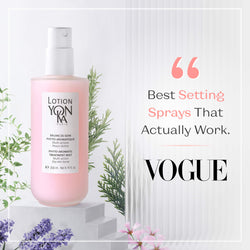
A critical, often overlooked step in the professional ritual is the use of a botanical mist. Applying moisturizer to bone-dry skin is far less effective than applying it to slightly damp skin. A mist like Lotion Yon-Ka saturates the skin with phyto-aromatic water. This prepares the "channels" of the skin, allowing subsequent creams to glide on smoothly and absorb more deeply, meaning you actually need to use less product to achieve better results.
How to Find Your Hydration Sweet Spot
Determining the "right" amount of moisturizer is a practice in mindfulness. Your skin's needs change based on the season, your stress levels, and even your diet.
The "Nickel" Rule
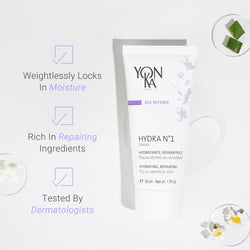
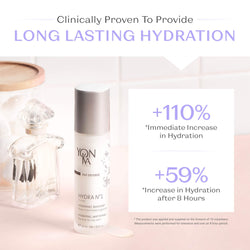
For most people, a nickel-sized amount of moisturizer is sufficient for the entire face and neck. If you are using a very concentrated professional formula, such as Hydra N°1 Creme, you might find that even a pea-sized amount is plenty when applied over a mist.
The Absorption Test
After applying your moisturizer, wait ten to fifteen minutes. Your skin should feel soft and "bouncy" to the touch. If your skin still feels "wet" or if you can see a visible layer of shine that doesn't go away, you have used too much. If your skin feels tight or looks matte shortly after application, you may need to add a booster or switch to a richer texture.
Seasonal Adjustments
Your skin in July is not the same as your skin in January.
- In Summer: Switch to lighter textures like Hydra N°1 Fluid or a water-based gel to prevent congestion in the heat.
- In Winter: Introduce lipid-restoring oils or richer creams like Hydra N°1 Serum mixed into your daily moisturizer to combat the harsh, drying air.
Restoring the Ritual: Correcting the Mismatch
If you suspect you have been over-moisturizing and your skin feels "stuck," it may be time for a gentle reset. Rather than stopping all products—which can cause a rebound effect of extreme dryness—simplify your routine to the essentials.
Step 1: Gentle, Barrier-Respecting Cleansing
Stop using foaming cleansers that leave the skin feeling "squeaky clean." This sensation usually means the barrier has been stripped. Instead, use a milk cleanser like Lait Nettoyant. It removes impurities while maintaining the skin’s delicate acid mantle (the protective film on the skin's surface).
Step 2: Rehydrate with a Phyto-Aromatic Mist
Immediately after cleansing, spray Lotion Yon-Ka PS vs. Lotion Yon-Ka PNG: Which Is Right for Your Skin?. This re-acidifies the skin and provides an initial layer of hydration.
Step 3: Targeted Treatment
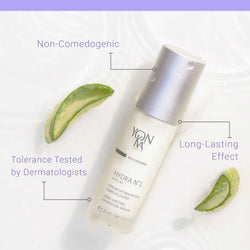
If your skin is severely dehydrated, use a high-performance serum like Hydra N°1 Serum before your cream. This allows you to deliver deep hydration without needing a thick, heavy cream that might clog your pores.
Step 4: The Right Moisturizer
Choose a moisturizer based on your current skin state.
- For intense, long-lasting hydration for dry skin, Hydra N°1 Creme is an excellent choice.
- For those seeing the first signs of aging and needing a lighter touch, Time Resist Jour provides hydration with the added benefit of plant stem cells and hyaluronic acid.
- For an oily complexion that still needs moisture, Hydra N°1 Fluid provides antioxidant protection in a texture that won't overwhelm the skin.
Note: When introducing any new botanical product containing essential oils, we recommend a simple patch test. Apply a small amount to the inner forearm and wait 24 hours to ensure your skin welcomes the new ingredients. A slight, brief tingling can be a normal sign of the active botanicals working, but persistent redness means you should reduce usage.
The Professional Advantage
While home care is the backbone of skin health, professional intervention can provide a necessary "reset." Many of our rituals were born in the treatment room, where estheticians use specific massage techniques to encourage lymphatic drainage and product absorption. If you find your skin is consistently difficult to balance, visit a local spa using our Spa Locator to consult with a professional. They can provide a deep-cleaning treatment or a professional-grade hydration facial that clears congestion and recalibrates your moisture levels. You can also explore our spa treatments for a more guided experience.
Conclusion
Moisturizing is a fundamental pillar of any skincare routine, but more is not always better. By understanding that "too much" moisturizer can lead to a lazy skin barrier and localized dryness, you can shift your focus toward balance and intention. Skincare is a ritual worth savoring—a daily moment of connection with yourself.
By choosing high-quality, phyto-aromatic formulas that work with your skin’s biology, you can achieve that sought-after glow without the risk of congestion or irritation. Remember that consistency and the right layering of products—cleansing, misting, and treating—are far more effective than any single heavy cream. If you are unsure which products are right for your specific concerns, we invite you to take our Skin Diagnosis quiz or use the Product Matcher on our website to find your perfect fit.
Yon-Ka Paris remains committed to our 70-year legacy of botanical excellence. We believe that when you give your skin the right plants in the right proportions, it has the incredible power to heal and reveal its natural beauty. For more perspective on our heritage, explore our story.
FAQ
Can using too much moisturizer cause acne?
Yes, over-moisturizing can lead to breakouts, especially if the product is too heavy for your skin type. Excess cream can trap dead skin cells, sebum, and bacteria inside the pores, leading to congestion and inflammatory acne.
How do I know if my moisturizer is too heavy?
If your skin feels greasy or sticky ten minutes after application, or if you notice small white bumps (milia) forming around your eyes or cheeks, your moisturizer is likely too heavy. Your skin should feel soft and dewy, not "coated" or slick.
Should I stop moisturizing if my skin is oily?
No, you should never skip moisturizer entirely, as dehydrated oily skin will often produce more oil to compensate for the lack of water. Instead, switch to a lightweight, oil-free, or mattifying formula like a gel or a fluid that provides hydration without adding excess lipids.
How long does it take for my skin to recover from over-moisturizing?
Once you simplify your routine and switch to the correct products, most people see an improvement in skin texture and balance within one to two weeks. This gives the skin time to clear out congestion and begin re-regulating its own natural moisturizing factors.