Table of Contents
- Introduction
- Understanding the Needs of Dry Skin
- Key Ingredients to Look for in a Dry Skin Cleanser
- Why Texture Matters: Milk vs. Foam
- The Professional Choice: Lait Nettoyant
- How to Properly Cleanse Dry Skin
- Beyond Cleansing: The Essential Mist Step
- Addressing Common Myths About Dry Skin Cleansing
- The Importance of Seasonal Adjustments
- A Note on Safety and Sensoriality
- Building a Complete Ritual for Dry Skin
- Conclusion
- FAQ
Introduction
Stepping out of a warm shower only to feel your face tighten like a drum is a telltale sign that your cleansing routine needs a shift. For those with dry skin, the search for a cleanser often feels like a balancing act between achieving a clean feel and avoiding that parched, flaky aftermath. At Yon-Ka Paris, we believe that cleansing should never be a chore that strips the skin, but rather a comforting ritual that begins the hydration process. This article will explore the physiological needs of dry skin, the specific botanical ingredients that support a healthy moisture barrier, and how to select a formula that leaves your complexion feeling supple and soft. By understanding the science of phyto-aromatic care, you can transform your daily wash into a restorative treatment.
Understanding the Needs of Dry Skin
Before determining which is the best face wash for dry skin, it is essential to understand what is happening beneath the surface. True dry skin—known as alipidic skin—is a skin type characterized by a lack of natural oils (sebum). Without enough oil, the skin's protective barrier becomes compromised. This barrier, often called the moisture barrier or stratum corneum, is responsible for keeping essential hydration locked in and environmental irritants out.
For Dry & Dehydrated Skin, choosing a face wash that is too aggressive can exacerbate these issues. When this barrier is weak, moisture evaporates more quickly, a process known as transepidermal water loss (TEWL). This leads to the classic symptoms of dryness: a rough texture, visible flaking, and a persistent feeling of discomfort. Unlike dehydrated skin, which simply lacks water and can affect any skin type, dry skin needs lipids to repair its "mortar" and regain its natural resilience.
Choosing a face wash that is too aggressive can exacerbate these issues. Many conventional cleansers use harsh surfactants that dissolve the very oils your skin is struggling to produce. This leaves the skin vulnerable and can even lead to secondary issues like sensitivity or premature aging, which is why readers concerned about fine lines often also browse our anti-aging collection. The goal for dry skin is to find a formula that removes impurities—such as pollution, sweat, and makeup—while actually contributing to the skin's lipid levels.
Key Ingredients to Look for in a Dry Skin Cleanser
The efficacy of a cleanser for dry skin lies in its ingredient deck. Rather than focusing on what to remove, we look for what the formula can provide. Botanical science offers a wealth of ingredients that mirror the skin's natural composition, allowing for a deep clean that respects the delicate balance of the epidermis. You can explore more about the philosophy behind these ingredients on our ingredients page.
Plant-Based Emollients
Emollients are ingredients that soften and smooth the skin by filling in the tiny gaps between skin cells. In our formulations, we prioritize plant oils rich in essential fatty acids. Oils like borage, sesame, and sunflower are excellent for dry skin because they provide the lipids necessary to reinforce the barrier. These oils allow the cleanser to glide over the skin, lifting away debris without friction.
Humectants
While dry skin primarily lacks oil, it also needs help holding onto water. Humectants are "moisture magnets" that draw water into the upper layers of the skin. Glycerin is a gold-standard humectant that is exceptionally well-tolerated. When included in a creamy cleanser, it ensures that the skin stays hydrated even after the product is rinsed away.
Soothing Botanicals
Dry skin is often prone to redness and irritation because its barrier is thin. Ingredients like allantoin and aloe vera provide immediate relief during the cleansing process. At Yon-Ka, we also harness the power of our signature Quintessence—a blend of lavender, geranium, rosemary, cypress, and thyme essential oils. This complex not only provides a therapeutic aromatic experience but also helps to balance and revitalize the appearance of the skin.
Why Texture Matters: Milk vs. Foam
When asking which is the best face wash for dry skin, texture is more than just a preference; it is a functional choice. Most skincare professionals recommend milk or cream textures for those with chronic dryness.
Quick Answer: The best face wash for dry skin is typically a non-foaming cleansing milk or cream. These formulas use oils and emollients to dissolve impurities rather than harsh suds, which helps preserve the skin’s vital moisture barrier.
Foaming cleansers often rely on surfactants that create big bubbles but can be too alkaline for dry skin. This can disrupt the skin’s natural pH mantle (which is slightly acidic). A cleansing milk, such as our cleansers collection, feels like a thin lotion. It emulsifies with water but does not "suds up," ensuring that the skin’s natural oils remain intact. For those who truly enjoy a foaming sensation, it is vital to choose a "soap-free" formula specifically labeled for sensitive or dry skin to avoid the "squeaky clean" feeling that actually indicates a stripped barrier.
The Professional Choice: Lait Nettoyant
In our 70 years of experience in professional spas, we have found that a high-quality cleansing milk is almost always the superior choice for dry and sensitive complexions. In our cleansers collection, this philosophy is clear, and our Lait Nettoyant is a cult favorite for a reason. It is a 2-in-1 formula that gently removes even heavy makeup from the face and eyes while treating the skin to a veil of hydration.
Born in the treatment room, this milk uses the softening properties of borneol and the balancing effects of the Quintessence. Because it is so gentle, it can be applied with the fingertips in a circular motion, allowing you to massage the skin and stimulate circulation without the need for abrasive washcloths. It rinses away easily with lukewarm water, leaving behind a silky finish that prepares the skin for the next steps of your ritual.
How to Properly Cleanse Dry Skin
The product you choose is only half of the equation; how you use it matters just as much. Follow these steps to ensure you are getting the most out of your dry skin cleanser:
- Use Lukewarm Water: Hot water is one of the most common causes of seasonal dryness. It strips away natural oils much faster than cool or lukewarm water. Always check the temperature before splashing your face.
- Apply to Dry or Damp Skin: For a milk cleanser like our cleansing milk, you can apply it directly to dry skin to help break down makeup and sebum more effectively. Add a little water later to emulsify.
- Gentle Massage: Use the pads of your fingers to move in upward, outward circles. This helps the plant oils in the formula bind to impurities.
- Pat, Don't Rub: After rinsing, use a soft, clean towel to pat your skin dry. Rubbing can cause micro-irritation and aggravate dry patches.
- The 60-Second Rule: Try to apply your next layer of hydration within 60 seconds of drying your face. This "damp skin" window is when your skin is most permeable.
Beyond Cleansing: The Essential Mist Step
In the Yon-Ka ritual, cleansing is never truly finished until the skin has been misted. For dry skin, this step is non-negotiable. After using a face wash, the skin’s pH can be slightly altered, and the water used for rinsing may contain minerals that leave a dulling residue.
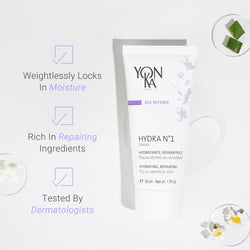
Using a phyto-aromatic mist like Lotion Yon-Ka PS serves three purposes. First, it rebalances the skin's pH. Second, it provides a boost of hydration through its essential oil complex. Third, it acts as a "carrier" for your serums and moisturizers. Applying a cream like Hydra n°1 Crème onto skin that is still damp with Lotion Yon-Ka allows the active ingredients to penetrate more deeply and spread more evenly.
Addressing Common Myths About Dry Skin Cleansing
There are several misconceptions that can lead people to choose the wrong products. Let's clear up some of the most common myths.
Myth: You don't need to wash your face in the morning if you have dry skin.
Fact: While you haven't been "out in the world," your skin has been busy regenerating overnight. It has produced sebum and shed dead skin cells, and there may be residue from your night cream. A gentle morning cleanse with a milk formula refreshes the skin and ensures your daytime antioxidants can work effectively.
Myth: If a cleanser doesn't foam, it isn't cleaning your pores.
Fact: Oil dissolves oil. Emollient-rich cleansers are actually highly effective at deep-cleaning pores because the plant oils in the formula can "grab" onto the oxidized sebum (blackheads) and lift them away more gently than a foaming detergent.
Myth: Essential oils are too drying for parched skin.
Fact: When formulated correctly by experts, specific essential oils are incredibly beneficial for dry skin. Lavender and geranium, for instance, are known for their soothing and regenerative properties. You can learn more about that approach on our formulas page.
The Importance of Seasonal Adjustments
Your skin is a living organ that reacts to its environment. A face wash that works perfectly in the humid summer months might feel too light during a harsh, dry winter. During the colder months, when indoor heating and outdoor winds combine to deplete skin moisture, you may want to lean more heavily into lipid-rich boosters.
Adding a few drops of Serum Omega can provide the extra fatty acids your barrier needs to stay intact. If you find your skin feels particularly "tight" during the winter, consider doing a "pre-cleanse" with a nourishing oil or simply spending more time massaging your milk cleanser into the skin to ensure maximum emollient absorption.
A Note on Safety and Sensoriality
Because dry skin often goes hand-in-hand with sensitivity, we always recommend a cautious approach when introducing new botanical formulas. Our formulas page explains how we balance efficacy, safety, and sensoriality across the range.
Note: Before fully incorporating a new product into your ritual, perform a patch test on your inner forearm for 24 hours. Introduce one new product at a time so you can accurately monitor how your skin responds. A slight, brief tingling can sometimes occur with active essential oils, but if you experience persistent redness or itching, reduce the frequency of use or consult your aesthetician.
Skincare is more than just a biological necessity; it is a moment of wellbeing. The scent of lavender and rosemary in your cleanser should serve as a signal to your nervous system to relax. This "aromachology" effect is central to our philosophy—when you are relaxed, your skin is better able to receive the benefits of the treatment.
Building a Complete Ritual for Dry Skin
Choosing the right face wash is the first step, but it is part of a larger ecosystem. For those struggling with dryness, we recommend a layered approach that focuses on long-term barrier health rather than "quick fixes."
- Cleanse: Use Lait Nettoyant morning and night.
- Mist: Saturate the skin with our face toners and mists.
- Treat: Apply a hydrating serum like Hydra N°1 Serum to pull moisture into the deeper layers.
- Moisturize: Seal everything in with Hydra N°1 Crème or, for very dry skin, the lipid-rich Booster Nutri +.
- Exfoliate Gently: Dry skin still needs exfoliation to remove the "grey" layer of dead cells that prevents product absorption. Use a grain-free exfoliator like Gommage Yon-Ka once or twice a week to polish the skin without irritation.
By following this sequence, you ensure that every product builds upon the last, creating a resilient shield against the elements.
Conclusion
Finding which is the best face wash for dry skin often marks a turning point in one’s skincare journey. By moving away from harsh, foaming detergents and embracing the nourishing power of botanical milks and plant oils, you allow your skin to heal and thrive. Remember that consistency is the key to lasting results; a dedicated ritual will always outperform a sporadic "hack."
At Yon-Ka Paris, we remain committed to the fusion of nature and science that our founders pioneered in 1954, and you can explore our story since 1954 to see how that heritage shapes our approach. Our goal is to provide you with the tools to transform your skin through the power of phyto-aromatic care and professional-grade formulations. Whether you are dealing with seasonal dryness or a lifelong skin type, there is a botanical solution waiting for you.
Key Takeaway: The ideal cleanser for dry skin must remove impurities while simultaneously replenishing lipids. Look for non-foaming milk textures and botanical ingredients like glycerin and plant oils to maintain a soft, radiant appearance.
If you are unsure which products are right for your unique concerns, we invite you to take our Skin Diagnosis quiz.
For a more intensive experience, use our Spa Locator to find a Yon-Ka professional near you who can provide a personalized treatment and expert guidance.
If you would like to experience Yon-Ka in person, explore our Spa Treatments and see how a professional session can support your routine.
FAQ
Should I wash my face twice a day if I have dry skin?
Yes, but you must use a gentle, non-stripping cleanser like a cleansing milk. A morning wash removes overnight sebum and dead skin cells, while an evening wash is essential for removing pollution, sunscreen, and makeup that can irritate a dry skin barrier if left on overnight. For a broader selection, browse our face cleansers collection.
Can I use a foaming face wash if my skin is dry?
While most people with dry skin prefer milks or creams, you can use a foaming wash if it is specifically formulated to be "soap-free" and pH-balanced. However, if your skin feels tight or "squeaky" after rinsing, the formula is likely too aggressive for your moisture barrier, and you should switch to a creamier texture. For a better match, start with the Dry & Dehydrated Skin collection.
Is a milk cleanser better than micellar water for dry skin?
Milk cleansers are generally better for dry skin because they contain emollients and oils that stay on the skin to provide comfort, whereas micellar waters can sometimes leave the skin feeling slightly parched if they contain certain surfactants. Milk cleansers also offer a more thorough massage experience, which can help boost circulation in dull, dry complexions. If you want to compare options, revisit the Product Spotlight: Lait Nettoyant for a closer look at the cleansing milk.
How do I know if my face wash is too harsh?
If your skin feels tight, looks red, or develops itchy, flaky patches immediately after washing, your cleanser is likely stripping your natural lipids. A proper face wash for dry skin should leave your face feeling soft, calm, and "plump" rather than stripped or irritated. If redness is already a concern, the Sensitive Skin & Redness collection can help you narrow your next step.