Table of Contents
- Introduction
- Understanding Oily Skin and Its Unique Needs
- Key Ingredients to Look For
- Identifying the Best Mask Type for Your Skin
- How to Build Your Masking Ritual
- The Importance of Essential Oil Safety
- Common Masking Mistakes to Avoid
- Why Professional Expertise Matters
- Frequency and Consistency: The Path to Clear Skin
- Conclusion
- FAQ
Introduction
Finding the right balance for oily skin often feels like a delicate dance. You want to diminish that midday shine and clear away congestion, yet over-cleansing or using harsh, stripping products can actually trigger the skin to produce even more oil in defense. At Yon-Ka Paris, we believe the solution lies in botanical synergy—using the power of nature to purify the skin while maintaining its vital moisture barrier, as explained in Our Ingredients.
In this guide, we will explore the nuances of oily skin, identify the key ingredients that help manage excess sebum, and help you select the ideal mask for your specific concerns. Whether you are dealing with enlarged pores, occasional blemishes, or a persistent oily T-zone, understanding how to ritualize your masking step is the key to a clearer, more refined complexion. We will look at how clay, plant extracts, and essential oils work together to transform your skin’s appearance and texture.
Understanding Oily Skin and Its Unique Needs
Oily skin is characterized by overactive sebaceous glands that produce an abundance of sebum. While sebum is essential for keeping the skin lubricated and protected, an excess can lead to a variety of cosmetic concerns. You might notice your skin looks shiny just a few hours after washing, or that your pores appear larger and more visible, particularly on the nose, chin, and forehead.
When excess oil mixes with dead skin cells, it can trap debris within the pores, leading to the appearance of "clogged" skin or blackheads. This is why a targeted face mask is such a critical step for this skin type. Unlike a daily cleanser that stays on the skin for only a minute, a mask provides a concentrated, prolonged treatment that can draw out impurities and refine the skin surface more effectively, especially when chosen from our face masks collection.
However, it is a common misconception that oily skin needs to be "dried out." In fact, dehydrated oily skin is a very real concern. If you use products that are too aggressive, you may damage the skin's natural protective barrier, leading to redness and irritation. The goal of a high-quality mask should be to balance and purify, not to strip and sensitize.
Key Ingredients to Look For
When determining what face mask you should use for oily skin, the ingredient deck is your most important roadmap. For those with oily or combination skin, we look for botanicals and minerals that possess "sebum-regulating" and "astringent" properties.
Natural Earth Clays
Clay is the gold standard for oily skin management. There are various types of clay, each with different mineral compositions and absorption levels.
- Montmorillonite: A highly absorbent green clay that is excellent for drawing out deep-seated impurities and excess oil.
- Kaolin: A gentler, white clay that helps to refine the skin’s appearance without being overly drying.
- Bentonite: Often used for its ability to "vacuum" the pores and provide a temporary tightening effect.
Alpha Hydroxy Acids (AHAs)
AHAs, such as glycolic acid, are water-soluble acids derived from sugary fruits. They work by gently dissolving the "glue" that holds dead skin cells together. For oily skin, this is crucial because it prevents those dead cells from falling into the pores and creating blockages. Regular use of AHAs can help the skin look smoother and more radiant.
The Phyto-Aromatic Power of the Quintessence
At the heart of our formulations is the Yon-Ka Quintessence, a proprietary blend of five essential oils: lavender, geranium, rosemary, cypress, and thyme. For oily skin, these oils provide more than just a beautiful, spa-like scent. Rosemary and thyme, in particular, are known for their purifying and toning properties, helping to support a clearer-looking complexion while the lavender and geranium provide a soothing effect.
Zinc and Sulfur
These minerals are often found in professional-grade masks for oily skin. They are prized for their ability to help minimize the look of redness and absorb surface oils, leaving the skin with a matte finish.
Identifying the Best Mask Type for Your Skin
Not all oily skin is the same. Some people have "true" oily skin, where the entire face produces excess sebum, while others have "combination" skin, where only the T-zone (forehead, nose, and chin) is oily, and the cheeks feel dry or tight. If that sounds familiar, our oily and combination skin collection is a helpful place to start.
For Deep Purification: The Green Clay Mask
If your primary concern is congestion, blackheads, and heavy shine, a triple-clay mask like Masque 103 is often the best choice. This type of mask utilizes high concentrations of Montmorillonite to provide a deep cleaning of the pores. It is designed to clarify the skin and tighten the appearance of pores, making it a staple for those with very oily skin.
For Sensitive or Dry-Leaning Oily Skin: The Gentle Balancing Mask
Many people struggle with skin that is oily on the surface but feels sensitive or "reactive." If this sounds like you, a mask like Masque 105 is a better fit. While it still contains purifying clays, it is formulated to be more soothing. It helps to clear the skin without causing the "cracking" or tightness that some clay masks can cause.
For Texture and Radiance: The Peeling Mask
Sometimes, oily skin can look dull because of a buildup of dead skin cells. In this case, an exfoliating mask is essential. A product like Glyconight 10% Masque uses glycolic acid to provide a controlled "peeling" effect overnight. This helps to refine the appearance of skin texture and can be a game-changer for those who want to wake up with a brighter, more even-toned complexion.
For Gentle Refinement: The Non-Grain Gommage
A unique approach to masking for oily skin involves a "gommage"—a French term for a grain-free, enzymatic exfoliant. Gommage Yon-Ka is a botanical gel that you apply like a mask but then gently buff away. It is 4-in-1: it exfoliates, clarifies, hydrates, and balances. Because it contains no abrasive scrubs, it is perfect for oily skin that might be prone to blemishes, as it won't spread bacteria or cause micro-tears.
How to Build Your Masking Ritual
Skincare is most effective when it is viewed as a ritual rather than a chore. To get the most out of your mask, it is important to follow a specific sequence.
Step-by-Step Masking Ritual for Oily Skin
Step 1: Deep Cleanse / Begin by removing makeup and daily impurities with a gentle milk cleanser like Lait Nettoyant. This respects the skin's pH while ensuring the mask can reach the pores.
Step 2: Prepare with Mist / Spray a generous amount of Lotion Yon-Ka PNG (our alcohol-free mist for normal to oily skin) over the face. This hydrates the skin and helps the active ingredients in your mask penetrate more effectively.
Step 3: Apply the Mask / Apply your chosen mask—such as Masque 103—in a thick, even layer over the face and neck. Avoid the delicate eye area unless the product is specifically designed for it.
Step 4: The Toning Finish / After removing the mask with lukewarm water, mist again with Lotion Yon-Ka. This rebalances the skin and prepares it for your serum or moisturizer.
Key Takeaway: Always apply your mask to clean, slightly damp skin. This ensures the clays can work effectively without immediately pulling moisture out of the surface layers of your skin.
The Importance of Essential Oil Safety
Since our masks are enriched with the Quintessence and other botanical extracts, it is important to introduce them thoughtfully into your routine. While our formulas are designed with pharmaceutical-level rigor in our facility near Paris, every individual's skin is unique.
Note: We recommend performing a patch test when introducing a new product to your ritual. Apply a small amount to your inner forearm and wait 24 hours to ensure no sensitivity occurs.
If you experience a slight, temporary tingling sensation during the first few minutes of applying a mask like Masque 103, this is often a normal sign of the essential oils and minerals at work. However, if you experience persistent redness, burning, or discomfort, you should rinse the product off immediately and consult a professional. Introduce active masks once a week at first, and gradually increase to twice or three times a week as your skin builds tolerance and you observe how it responds.
Common Masking Mistakes to Avoid
Even with the best products, your results depend on how you use them. Many people inadvertently sabotage their oily skin care by following common myths.
Myth: You should let a clay mask dry until it cracks and crumbles. Fact: When a clay mask dries completely, it can actually begin to draw moisture out of your skin, leading to dehydration. For the best results, you should rinse the mask off while it still feels slightly tacky or damp to the touch.
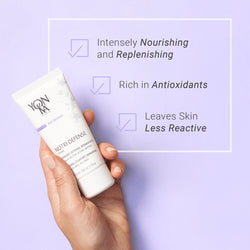
Another mistake is neglecting hydration after masking. Many people with oily skin believe that if their skin feels "tight" after a mask, it means the product worked. In reality, that tightness is a sign of distress. Always follow your masking ritual with a lightweight, non-comedogenic moisturizer like Vital Defense or Nude Perfect Fluide. This "seals in" the benefits of the mask and tells your sebaceous glands that the skin is sufficiently hydrated, preventing a rebound of oil production.
Why Professional Expertise Matters
Our brand was founded in 1954 by the Mühlethaler family, who were pioneers in the fusion of aromatherapy and phytotherapy. Long before "clean beauty" became a trend, Yon-Ka was developing professional-grade, botanical formulas for spa environments.
Nearly all our masks were originally created for use by licensed estheticians in professional treatment rooms. This heritage means our products are designed to deliver visible, salon-quality results at home. When you use a mask like Masque 103, you are using a tool that over 7,000 skincare professionals worldwide trust for their clients.
If you are unsure which mask is right for your unique skin concerns, we encourage you to use our online Skin Diagnosis quiz or the Product Matcher tool. For those seeking a more intensive experience, you can use our Spa Locator to find a Yon-Ka professional near you who can perform a customized purifying treatment.
Frequency and Consistency: The Path to Clear Skin
Masking is not a "one and done" fix. To see a lasting change in the appearance of your pores and a reduction in shine, consistency is paramount. For oily skin, we generally recommend masking one to three times per week.
Think of your masking day as a "reset" for your skin. It is the time when you clear away the accumulation of the week and provide your pores with a deep-clean that daily cleansing simply cannot achieve. Over time, you may find that your makeup stays on longer, your skin texture feels smoother, and that unwanted midday "glow" becomes a thing of the past.
Bottom line: A consistent masking ritual tailored to your oily skin type will help regulate the appearance of sebum, refine pore structure, and maintain a balanced, healthy-looking complexion without the need for harsh chemicals or stripping agents.
Conclusion
Choosing the right face mask for oily skin is about more than just "oil control"; it is about providing your skin with the botanical nutrients it needs to thrive and find its natural equilibrium. By incorporating purifying clays, exfoliating AHAs, and the revitalizing power of our signature Quintessence, you can create a ritual that is as effective as it is sensorial.
At Yon-Ka Paris, we remain dedicated to the belief that skincare should be a moment of well-being—a ritual worth savoring. Whether you choose the deep purification of our clay masks or the overnight refining power of a glycolic peel, you are participating in a 70-year legacy of French phyto-aromatic excellence. Explore our complete collection of masks and treatments to find the perfect addition to your skincare program, and learn more about the brand on Our Ingredients.
"Skincare is not just a routine; it is an act of self-care that connects the power of nature with the science of the skin."
To find your perfect match, take our Skin Diagnosis quiz or browse our Face Care collection for oily skin today.
FAQ
How often should I use a clay mask for oily skin?
Generally, we recommend using a clay mask like Masque 103 one to three times per week. If your skin is very oily and congested, three times may be appropriate, but if you have combination or sensitive skin, once or twice a week is usually sufficient to maintain balance without over-drying.
Can I leave my face mask on overnight?
It depends on the formula. Clay-based masks should always be rinsed off after 10 to 20 minutes and never left on overnight, as they can cause significant dehydration. However, masks specifically designed for overnight use, such as Glyconight 10% Masque, are formulated to work gradually while you sleep and should be rinsed off the following morning.
Should I moisturize after using a mask for oily skin?
Yes, you should always follow a mask with a moisturizer or serum. Even if your skin feels "clean" or oily, a moisturizer like Vital Defense helps to lock in hydration and protect the skin barrier. This prevents the skin from overcompensating for the masking process by producing more oil.
My skin feels tingly when I apply the mask; is this normal?
A slight tingling sensation is often normal when using products containing high concentrations of essential oils or active botanicals like those in our Quintessence. This is usually a sign of the ingredients stimulating the skin. However, if the sensation turns into burning or is accompanied by persistent redness, you should rinse the product off and consult a professional.