Table of Contents
- Introduction
- The Science of Shedding: Why Skin Flakes
- The Risks: Why You Should Never Manually Peel
- Identifying the Culprit: What Causes Flaky Skin?
- The Yon-Ka Approach: Gentle, Grain-Free Exfoliation
- A Phyto-Aromatic Ritual for Healing Flaky Skin
- Essential Oil Safety and Sensory Wellness
- Preventive Measures for a Flake-Free Complexion
- When to Consult a Professional
- Conclusion
- FAQ
Introduction
There is a specific, quiet frustration that comes with catching a glimpse of your reflection and noticing tiny, translucent flakes of skin around your nose, chin, or forehead. The immediate impulse is often tactile—you want to reach up and gently peel those flakes away to reveal the smooth skin you know is underneath. It feels like a quick fix, a way to "clean up" your complexion before applying makeup or heading out for the day. However, this common skincare moment is one where restraint is your greatest ally.
At Yon-Ka Paris, we have spent over 70 years studying the delicate balance of the skin’s ecosystem. We understand that while peeling skin is a nuisance, it is actually a vital communication from your body. This article covers why manual peeling is a risk to your skin’s health, the biological causes behind those stubborn flakes, and the professional phyto-aromatic methods we use to restore a smooth, radiant glow without causing damage. Understanding the "why" behind the flake is the first step toward a more resilient, hydrated complexion.
Quick Answer: You should never manually peel or pick at dry, flaky skin on your face. Doing so can tear "live" skin cells, damage your moisture barrier, and lead to inflammation, redness, or even long-term hyperpigmentation. Instead, use gentle, grain-free exfoliation and intensive hydration to support the skin's natural shedding process.
The Science of Shedding: Why Skin Flakes
To understand why you shouldn't peel your skin, it is helpful to look at how your skin naturally regenerates. This process is called desquamation. In a healthy cycle, new skin cells are born in the deepest layer of the epidermis and travel toward the surface. By the time they reach the top, they are flat, dead cells called corneocytes. Under normal conditions, these cells shed invisibly every day, making room for the fresh, vibrant skin beneath.
Visible flaking occurs when this cycle is disrupted. When the skin lacks sufficient moisture or oil, or when it has been damaged by external factors, the enzymes responsible for dissolving the "glue" that holds these dead cells together can't function. Instead of shedding one by one, the cells stick together in clumps. These clumps become the visible flakes you see in the mirror. When you see a flake, it is often still partially attached to healthy, living tissue. Pulling it off is essentially forcing a biological process that isn't ready to happen, which is why manual peeling often leads to raw, tender patches.
The Risks: Why You Should Never Manually Peel
It may seem harmless to remove a loose bit of skin, but the consequences for your skin barrier can be significant. Your skin barrier, or the acid mantle, is a microscopic layer of lipids and moisture that keeps bacteria out and hydration in.
Tearing Live Tissue
Because those dry flakes are frequently still anchored to living cells, manual peeling often causes micro-tears. You might notice a spot becomes red or even slightly "weepy" after you've picked at a flake. This is a sign that you have stripped away more than just dead skin, leaving the underlying layers exposed and vulnerable.
Post-Inflammatory Hyperpigmentation
Any time you cause trauma to the skin—even minor trauma like peeling—the body responds with inflammation. This inflammation can trigger melanocytes (the cells responsible for pigment) to overproduce. This results in dark spots or "stains" on the skin that can take weeks or months to fade. What started as a small dry patch can quickly become a long-term complexion concern. If dullness or uneven tone is part of the picture, our dull skin collection is a natural place to start.
Increased Sensitivity and Infection
By forcing the skin to peel, you are exposing "young" cells that haven't fully developed their protective capabilities. These cells are more sensitive to sunlight, wind, and even the active ingredients in your daily moisturizer. Furthermore, every time you touch your face to peel or pick, you introduce bacteria from your fingertips into those micro-tears, increasing the risk of breakouts or localized infections.
Key Takeaway: Manual peeling is a form of physical trauma that disrupts the skin’s protective barrier, leading to a cycle of redness, sensitivity, and potential scarring.
Identifying the Culprit: What Causes Flaky Skin?
Treating the flake requires identifying why the desquamation process slowed down in the first place. Several factors can turn a smooth complexion into a flaky one.
Environmental Stressors
Low humidity is a primary cause of facial flaking. In the winter, cold outdoor air combined with dry indoor heating "sucks" moisture out of the skin. Similarly, excessive sun exposure causes UV damage that kills surface cells prematurely, leading to the classic "peel" associated with a sunburn. Even windburn can strip away the protective oils on your cheeks and nose, leaving them rough and scaly.
Product Overload and "The Active Trap"
In our modern quest for glowing skin, many of us over-exfoliate. Using high-strength AHAs (alpha hydroxy acids), BHAs (beta hydroxy acids), or retinoids too frequently can overwhelm the skin. While these ingredients are designed to speed up cell turnover, using them without enough supporting hydration causes the skin to shed faster than it can repair itself. This results in "the purge" or chronic peeling.
Distinguishing Dry vs. Dehydrated Skin
It is important to know if your skin is dry or dehydrated, as the solution differs.
- Dry Skin is a skin type that lacks oil (lipids). It often feels tight all over and may have small pores and a dull appearance.
- Dehydrated Skin is a temporary condition where the skin lacks water. It can happen to any skin type, including oily skin. Dehydrated skin often shows "crinkle" lines when you smile and can experience localized flaking even if the T-zone is shiny.
If you want to better understand where your skin fits, start with our Face Care collection, then narrow your ritual from there.
The Yon-Ka Approach: Gentle, Grain-Free Exfoliation
If you cannot peel the skin manually, the solution is to use professional-grade, gentle exfoliation that works with the skin's chemistry rather than against it. We pioneered the "grain-free" exfoliation method to ensure that even the most sensitive or dry complexions can achieve smoothness without irritation.
Traditional scrubs use abrasive particles like crushed shells or beads. These can be too harsh for a compromised barrier, acting like sandpaper on a delicate surface. Instead, we recommend biological or enzymatic exfoliation. This involves ingredients that mimic the skin’s natural enzymes to dissolve the bonds between dead cells.
The Power of Gommage Yon-Ka
Our iconic Gommage Yon-Ka is the ideal solution for those wondering how to handle flakes safely. This unique, plant-based gel is entirely grain-free. It uses citrus extracts to gently lift dead skin cells while carob and algae derivatives soothe and hydrate the surface.
When you apply it, you let it sit for a moment, and then gently "roll" it off with your fingertips. This rolling action picks up the dead, flaky cells that are truly ready to shed, without disturbing the healthy skin underneath. It effectively "cleans" the surface while leaving the skin feeling hydrated and calm—the exact opposite of the raw feeling that comes from manual peeling.
A Phyto-Aromatic Ritual for Healing Flaky Skin
When your face is peeling, your routine should shift from "correction" to "restoration." Our ritual method focuses on layering moisture to soften the flakes so they can shed naturally.
Step 1: Gentle, Barrier-Respecting Cleansing
Stop using foaming or "medicated" cleansers that leave your skin feeling tight. Instead, use a creamy milk cleanser like our Lait Nettoyant. Formulated with grape seed oil, it cleanses while replenishing lipids. It creates a "buffer" for your skin, ensuring that your cleaning step doesn't contribute to further dryness.
Step 2: The Phyto-Aromatic Mist
The misting step is critical for flaky skin. Lotion Yon-Ka PS is infused with our signature Quintessence. This blend of lavender, geranium, rosemary, cypress, and thyme helps to soothe inflammation and rebalance the skin. Misting before applying your serum or moisturizer also "traps" that hydration against the skin, making your products more effective.
Step 3: Targeted Repair
For skin that is actively peeling, you need ingredients that heal the barrier.
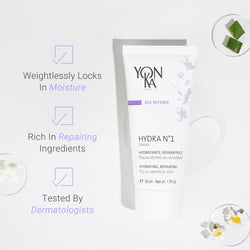
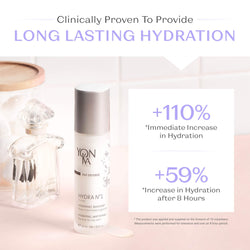
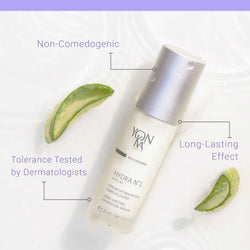
- Hydra N°1 Crème: This is an intensive repair cream containing two types of hyaluronic acid and shea butter. It provides a "bandage" effect, smoothing down flakes and deeply hydrating.
- Serum Omega: If your skin feels brittle, it needs oil. This "lipid-restoring" serum uses omegas 3, 6, and 9 to reinforce the skin’s structure. It is excellent for cold-weather protection.
- Serum Vitamine C 20%: If your flaking is due to dullness or environmental stress, this stable vitamin C serum can support the appearance of a brighter, more even tone once the initial irritation has subsided.
Step 4: The Recovery Mask
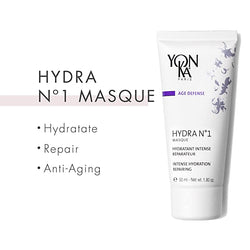
Once or twice a week, replace your night cream with Hydra N°1 Masque. This time-released hydrating mask is specifically designed to treat damaged, peeling, or very dehydrated skin. You can apply a thick layer, let it absorb, and leave it on overnight to wake up with a significantly smoother surface.
Step-by-Step Recovery Ritual:
- Cleanse with Lait Nettoyant using gentle, circular motions. Pat dry—do not rub.
- Mist generously with Lotion Yon-Ka PS.
- While skin is still damp, apply Serum Omega to areas with visible flakes.
- Seal with Hydra N°1 Crème.
- Apply a broad-spectrum SPF to protect the "young" skin from UV damage.
Essential Oil Safety and Sensory Wellness
Because our formulas are rooted in phyto-aromatics, they contain high-quality essential oils. These oils do more than just smell wonderful; they provide functional benefits to the skin. However, when your skin is peeling, it can be more reactive.
We recommend a simple patch test when introducing a new product to a compromised skin barrier. Apply a small amount to your inner forearm and wait 24 hours to ensure your skin is comfortable with the active botanicals. Introduce one new product at a time so you can accurately monitor how your skin responds. A slight, cooling tingle is often normal with our Quintessence-based products, but if you feel any persistent burning, you should rinse with cool water and consult your physician. If you want a deeper look at how the formulas are built, explore our formulas and our ingredients.
Preventive Measures for a Flake-Free Complexion
Consistency is the key to preventing the return of dry, flaky patches. Skincare is a ritual, not a quick fix.
- Humidity Control: Use a humidifier in your bedroom during the winter months. Adding moisture to the air prevents your skin from losing its own hydration while you sleep.
- Temperature Check: Avoid washing your face with very hot water. Heat strips the natural oils from your face, leading directly to that tight, flaky feeling. Use lukewarm water instead.
- Hydrate from Within: While topical products do the heavy lifting, drinking enough water supports your overall skin health.
- Regular, Gentle Exfoliation: Don't wait for flakes to appear. Using a gentle exfoliator like Gommage Yon-Ka once a week as part of your maintenance routine keeps the cell turnover process moving smoothly so clumps of dead skin don't have the chance to form.
Myth: "I need to scrub harder to get the flakes off." Fact: Vigorous scrubbing causes micro-tears and increases inflammation, which actually slows down the healing process. Gentle, enzymatic exfoliation is far more effective and much safer.
When to Consult a Professional
While most cases of flaky skin are due to dryness or environmental factors, persistent peeling can sometimes be a sign of a medical condition. If your skin is persistently red, itchy, painful, or if you notice yellowish scales or crusting, it is time to see a dermatologist. Conditions like seborrheic dermatitis, eczema, or psoriasis require medical diagnosis and treatment plans that may include prescription topicals.
For those who simply want to take their hydration to the next level, a professional facial is an excellent investment. Our trained estheticians use specialized techniques and professional-only versions of our products to deeply hydrate and resurface the skin. You can find a local expert who uses our methods by visiting our Spa Locator.
Conclusion
The urge to peel off dry, flaky skin on your face is understandable, but your skin's health depends on your ability to resist it. By manually picking at flakes, you risk damaging your barrier, causing long-term spots, and increasing sensitivity. The path to a smooth, radiant complexion is not found through force, but through the gentle power of phyto-aromatic care.
By utilizing restorative cleansers like Lait Nettoyant, soothing mists like Lotion Yon-Ka PS, and grain-free exfoliants like Gommage Yon-Ka, you support your skin’s natural rhythm. For over seven decades, we have remained committed to the belief that skincare is a ritual worth savoring—one built on the synergy of nature and science. Through the expertise of Yon-Ka Paris, you can transform a moment of frustration into a lifetime of healthy, glowing skin. If you are unsure which ritual is right for your specific needs, we invite you to begin with our Face Moisturizers collection, our Face Masks collection, or a professional treatment experience.
FAQ
Is it okay to peel off a sunburn?
No, you should never peel a sunburn. The skin is peeling because the cells have been damaged by UV radiation, and the underlying "new" skin is extremely fragile and not yet ready for exposure. Peeling it manually can lead to infection and permanent scarring or changes in skin pigment.
How do I get rid of flakes under my makeup?
To smooth flakes before makeup, do not scrub. Instead, apply a thick layer of a hydrating moisturizer like Hydra N°1 Crème and let it sit for five minutes. Then, gently use a damp, soft washcloth in a very light circular motion to lift only the loosest flakes before reapplying your moisturizer and primer.
Can oily skin also be flaky?
Yes, this is a common sign of dehydration. Oily skin produces excess sebum (oil) but can still lack water. When the skin is dehydrated, it becomes brittle and flakes, even if there is oil on the surface. Using a water-based hydrator like Hydra N°1 Fluide can help balance this.
How often should I exfoliate if my skin is peeling?
If your skin is actively peeling and sensitive, stop all exfoliation for a few days to let the barrier recover. Once the sensitivity has subsided, use a gentle, grain-free exfoliator like Gommage Yon-Ka once a week to help clear away the remaining dead cells without causing further irritation.
Where should I start if I’m still unsure?
If you want a more guided next step, explore our Face Care collection and our Anti-Aging Collections to match your routine to your concern.