Table of Contents
- Introduction
- The Science of Why Dead Skin Accumulates
- Scrubbing vs. Exfoliating: A Critical Distinction
- The Yon-Ka Solution: The Power of Gommage
- Chemical Exfoliation for Deep Renewal
- A Step-by-Step Ritual to Remove Dry Skin
- Key Botanical Ingredients for Dry Skin
- Essential Oil Safety and Sensorial Wellbeing
- The Professional Spa Connection
- Common Myths About Scrubbing Dry Skin
- Supporting the Barrier From Within
- What to Expect After Removing Dry Skin
- Conclusion
- FAQ
Introduction
There is a specific, frustrating moment many of us recognize: you apply your favorite foundation or tinted moisturizer, only to see it cling to tiny, jagged patches of dry skin you didn’t even know were there. Instead of a smooth canvas, the skin appears dull, uneven, and textured. At Yon-Ka Paris, we understand that the instinct is often to "scrub" these flakes away with force. However, dry skin requires a more sophisticated, gentler approach to achieve a true glow without damaging the delicate moisture barrier.
This article explores the professional secrets of removing dead skin, the science of cellular turnover, and how to transition from aggressive scrubbing to refined botanical exfoliation. We will cover the best ingredients for dry complexions, the difference between physical and chemical methods, and how to build a phyto-aromatic ritual that leaves your skin feeling soft and revitalized. Understanding the nuances of your skin's renewal process is the first step toward lasting radiance.
Quick Answer: To safely remove dry skin from your face, avoid harsh, abrasive scrubs and opt for a gentle "gommage" or a mild chemical exfoliant like lactic acid. These methods dissolve the bonds between dead cells without causing micro-tears, followed immediately by a hydrating serum and moisturizer to restore the skin barrier.
The Science of Why Dead Skin Accumulates
To understand how to address flakiness, we must first look at the biology of the skin's surface. Our skin is in a constant state of renewal through a process called desquamation. In a healthy cycle, new skin cells are produced in the deeper layers and travel to the surface over approximately 28 to 30 days. By the time they reach the top, they are flat, dead cells called corneocytes.
In an ideal scenario, these cells shed invisibly. However, several factors can cause them to clump together, leading to the visible flakes we try to "scrub" off:
- Slowed Turnover: As we age, the natural shedding process slows down, meaning dead cells sit on the surface longer, creating a dull appearance.
- Environmental Depletion: Cold weather, indoor heating, and low humidity strip the skin of the moisture it needs to fuel the enzymes responsible for shedding dead cells.
- Impaired Barrier: When the skin's lipid barrier is weakened, moisture escapes, causing the surface cells to become brittle and stick together.
- Product Buildup: Residual SPF, makeup, and environmental pollutants can act as a "glue," trapping dead skin on the surface.
When these cells accumulate, they don't just affect texture; they prevent your hydrating products from penetrating effectively. This creates a cycle where the skin remains dry because your moisturizers are simply sitting on top of a "wall" of dead cells.
Scrubbing vs. Exfoliating: A Critical Distinction
The term "scrub" is frequently misused in skincare. Traditionally, a face scrub implies a product containing physical particles—like crushed walnut shells, sugar, or apricot pits—designed to manually rub away dead skin. While this can feel satisfying, it is often too aggressive for the face.
The Danger of Micro-Tears Harsh physical scrubs can create "micro-tears" in the skin. These are tiny, invisible lacerations that compromise the skin barrier. For someone with dry skin, these tears allow even more moisture to escape and can lead to inflammation, redness, and increased sensitivity.
At Yon-Ka, we advocate for exfoliation over scrubbing. Exfoliation is the broader, more refined category that includes methods designed to lift or dissolve dead skin cells while respecting the integrity of the living tissue beneath.
Comparing Exfoliation Methods
| Method | How it Works | Best For |
|---|---|---|
| Physical (Abrasive) | Uses beads or grains to rub off skin. | Tougher body skin (elbows, feet). |
| Gommage (Grain-free) | A professional "peeling" gel that rolls off dead skin. | All skin types, especially sensitive/dry. |
| Chemical (AHAs) | Acids (like Glycolic) dissolve the "glue" between cells. | Dullness, aging, and deep texture. |
| Enzymatic | Fruit enzymes (Papaya/Pineapple) "digest" dead proteins. | Very sensitive or reactive skin. |
The Yon-Ka Solution: The Power of Gommage
If you are looking for how to scrub dry skin off your face without the risks of traditional abrasives, our signature Gommage Yon-Ka is the professional answer. This is a grain-free, botanical "peeling" gel that has been a favorite in treatment rooms for decades.
Instead of using friction from hard particles, this formula uses carob and lime extracts to gently lift dead skin. You apply it in a thin layer, let it sit for a moment, and then use your fingertips to "roll" it away. As the gel pills up, it catches the dead skin cells and lifts them away without a single scratch. This 4-in-1 treatment exfoliates, clarifies, hydrates, and balances the skin.
Key Takeaway: Effective exfoliation for dry skin should focus on "lifting" dead cells rather than "sanding" them down. Using a grain-free gommage provides the physical satisfaction of removal without the risk of barrier damage.
Chemical Exfoliation for Deep Renewal
While a gommage is excellent for surface flakiness, chemical exfoliants—specifically Alpha Hydroxy Acids (AHAs)—offer a deeper level of renewal. AHAs are water-soluble acids derived from natural sources like sugar cane or milk.
The Role of Glycolic and Lactic Acids
- Glycolic Acid: This is the most famous AHA. It has a small molecular size, allowing it to penetrate deeply to help with the appearance of fine lines and uneven tone. Our Glyconight 10% Masque uses this acid in a creamy, overnight formula to refine the skin while you sleep.
- Lactic Acid: This is often preferred for dry skin because it is a humectant, meaning it helps to pull moisture into the skin while it exfoliates.
When using these actives, it is vital to remember that they make the skin more sensitive to the sun. Always apply your sun protection every morning following a chemical exfoliation treatment.
A Step-by-Step Ritual to Remove Dry Skin
Removing dry skin is not just about the exfoliation step itself; it is about the ritual that surrounds it. Follow this sequence to ensure your skin remains calm and hydrated.
Step 1: Respectful Cleansing
Never exfoliate on top of makeup or daily grime. Start with Lait Nettoyant, our cleansing milk. Unlike foaming cleansers that can strip dry skin, this milk uses vegetable-derived cleansing agents and borneol to purify while maintaining the skin’s natural pH.
Step 2: The Phyto-Aromatic Prep
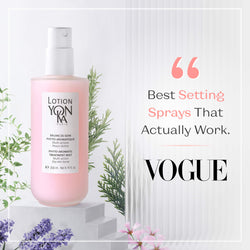
Before applying your exfoliant, mist your face with Lotion Yon-Ka PS. This isn't just a toner; it is a phyto-aromatic healing water. It contains our signature Quintessence—a blend of lavender, geranium, rosemary, cypress, and thyme—to drench the skin in moisture and prepare the cells for the next step.
Step 3: Targeted Exfoliation
Select your method based on your skin’s current state:
- For visible flakes: Apply Gommage Yon-Ka to the face and neck. Let it sit for 1–2 minutes, then gently roll it off with your fingertips.
- For overall dullness: Use Glyconight 10% Masque in the evening. Apply a thin layer and leave it on overnight.
Step 4: Intensive Rehydration
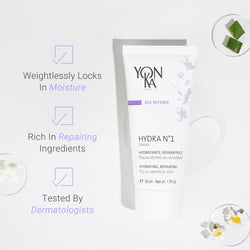
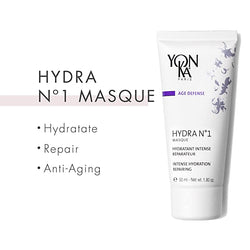
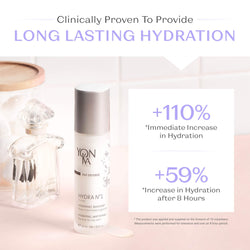
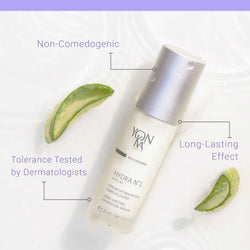
Now that the "wall" of dead skin is removed, your skin is highly receptive to actives. Apply Hydra n°1 Crème, which is formulated with hyaluronic acid to provide both immediate and long-term hydration.
Step 5: Seal the Barrier
Finish with a rich moisturizer like Hydra n°1 Crème. This step is crucial. Exfoliation temporarily leaves the skin more "open"; a good moisturizer acts as a protective shield, sealing in the serum and preventing water loss.
Key Botanical Ingredients for Dry Skin
When searching for products to address a flaky complexion, look for these high-performance botanical ingredients:
- Hyaluronic Acid: A molecule that can hold up to 1,000 times its weight in water, essential for plumping dry cells.
- Aloe Vera: Provides soothing hydration and helps calm any temporary redness after exfoliation.
- Vegetable Glycerin: A classic humectant that maintains the skin’s moisture levels.
- Brown Algae: Helps support skin regeneration and provides essential minerals.
- Shea Butter: Found in many of our richer creams, it provides the lipids necessary to repair a damaged barrier.
Essential Oil Safety and Sensorial Wellbeing
Because our formulas are rooted in aromachology, they contain pure essential oils. While these offer incredible benefits for the appearance of the skin and your overall sense of wellbeing, they should be used mindfully.
We always recommend a patch test before introducing a new active product, especially something potent like a 10% glycolic acid mask. Apply a small amount to your inner forearm and wait 24 hours. When you first use essential oil-rich products, a slight tingling sensation is normal—this is the "active" nature of the plants. However, if you experience persistent redness or irritation, reduce your frequency of use or consult a professional.
Note: If you have a medical skin condition such as diagnosed rosacea, eczema, or psoriasis, please consult with your physician or dermatologist before beginning a new exfoliation program.
The Professional Spa Connection
There is only so much we can do in our own bathrooms. Sometimes, dry skin buildup requires a professional hand. Our heritage began in the treatment rooms of France, and today over 7,000 professionals worldwide trust us for their most advanced facials.
A professional treatment, like our iconic Facial Treatments, involves deep pore cleansing and customized exfoliation techniques that are far more intensive than home care. An aesthetician can use tools like the "Lucas Championnière" to provide a unique, microscopic mist of botanical actives that deeply hydrates the skin. To find a professional near you, use our Spa Locator on our website.
Common Myths About Scrubbing Dry Skin
Myth: "If my skin is flaking, I need to scrub it every day until the flakes are gone." Fact: Over-scrubbing creates a cycle of inflammation. Exfoliating too often (more than 1–3 times a week) actually damages the skin barrier, leading to more dryness and flakiness.
Myth: "Chemical exfoliants are too harsh for dry, sensitive skin." Fact: When formulated correctly, chemical exfoliants like lactic acid or enzymes are often gentler than physical scrubs because they don't involve the friction that causes micro-tears.
Supporting the Barrier From Within
While topical products are essential for removing dry skin, we must also consider the internal and environmental factors that contribute to flakiness.
- Hydrate: Drinking adequate water is vital for skin health, though it is not a direct substitute for topical moisturizer.
- Humidify: If you live in a dry climate or use indoor heating, a humidifier in your bedroom can prevent the air from "stealing" moisture from your skin overnight.
- Temperature Control: Avoid washing your face with very hot water. Lukewarm water is best for preserving the skin's natural oils.
- Dietary Fats: Incorporating healthy fats like omega-3s (found in salmon, walnuts, and flaxseeds) can help support your skin's lipid barrier from the inside out.
What to Expect After Removing Dry Skin
When you move away from aggressive scrubbing and toward botanical exfoliation, you won't see a "permanent fix" overnight. Skincare is a ritual of consistency.
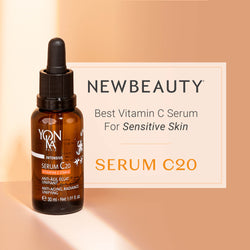
Initially, you may notice that your skin feels smoother to the touch immediately after using Gommage Yon-Ka. Over several weeks of using a product like Serum C20 or Glyconight 10% Masque, the appearance of your skin will likely become more luminous and the texture more refined. Makeup will lay flatter, and your skin will feel more "comfortable"—that tight, itchy feeling associated with dry skin will begin to dissipate as your barrier strengthens.
Conclusion
Learning how to scrub dry skin off your face is less about the "scrub" and more about the "glow." By moving away from harsh, abrasive methods and embracing the sophisticated phyto-aromatic approach of Yon-Ka Paris, you respect your skin's natural biology. Our 70-year history in French professional skincare has taught us that the most beautiful results come from a harmonious blend of pharmaceutical rigor and botanical power.
To find the perfect products for your specific skin concerns, we invite you to take our Skin Diagnosis quiz or use our Product Matcher. Whether you are looking for a gentle weekly refresh or a deep overnight renewal, there is a botanical solution waiting for you. Treat your skincare not as a chore, but as a ritual worth savoring—a moment of French-inspired self-care that reveals your most radiant self.
FAQ
Can I exfoliate if my skin is currently peeling?
If your skin is peeling due to a sunburn or a recent strong chemical peel, you should wait until the irritation has subsided before exfoliating. For standard dry-skin flakiness, a gentle grain-free gommage is safe and helpful to remove the buildup, provided you follow up with a rich moisturizer.
How often should I exfoliate dry skin?
For dry complexions, we generally recommend exfoliating 1 to 2 times per week. Over-exfoliating can strip away the very lipids your skin needs to stay hydrated, leading to increased sensitivity and more flakes.
Is it better to exfoliate in the morning or at night?
It depends on the product. Chemical exfoliants like glycolic acid are best used at night since they can increase sun sensitivity. A physical gommage can be used in the morning to create a smooth surface for makeup application, provided you apply SPF afterward.
What is the best way to remove flakes without a product?
If you are in a pinch, a very soft, damp muslin cloth used in gentle circular motions during your cleansing step can help lift some surface flakes. However, this is less effective than a targeted exfoliant and should always be followed by a hydrating serum.