Table of Contents
- Introduction
- Understanding the "Why" Behind Facial Peeling
- The First Response: Immediate Steps to Stop the Peel
- The Yon-Ka Phyto-Aromatic Approach to Healing
- A Targeted Ritual for Peeling Skin
- Essential Ingredients for Barrier Restoration
- Advanced Strategies: The Weekly Recovery Mask
- Myth vs. Fact: Navigating Peeling Skin Advice
- Lifestyle Adjustments to Support Healing
- When to See a Physician or Dermatologist
- Professional Spa Support for Deep Healing
- Conclusion
- FAQ
Introduction
There is a specific, quiet frustration that comes with catching your reflection in the afternoon light and noticing tiny, translucent flakes drifting across your cheeks or clustering around your nose. Peeling skin often feels like a betrayal of your morning routine—a sign that despite your best efforts, your complexion is struggling to retain its integrity. At Yon-Ka Paris, we view these visible flakes not just as a cosmetic nuisance, but as a vital message from your skin barrier that it needs immediate, compassionate intervention. Whether your skin is reacting to a seasonal shift, a new active ingredient, or environmental stress, the path to restoration lies in bridging pharmaceutical-grade efficacy with the soothing power of botanicals. In this article, we will explore the underlying causes of facial peeling and provide a professional, phyto-aromatic roadmap to help you return to a state of soft, supple balance.
Quick Answer: Healing dry peeling skin requires pausing all harsh actives (like retinoids or acids) and focusing on barrier repair. Use a gentle, milk-based cleanser, an alcohol-free toning mist, and a lipid-rich moisturizer containing ceramides or botanical oils to seal in hydration.
If you want a deeper look at the difference between dry and dehydrated skin, our Dry vs. Dehydrated Skin guide is a helpful place to start.
Understanding the "Why" Behind Facial Peeling
Before we can discuss how to heal the skin, we must understand why it has reached the point of visible shedding. The outermost layer of your skin, the stratum corneum, acts as a protective shield. When this barrier is healthy, skin cells (corneocytes) are held together by a rich matrix of lipids, including ceramides, cholesterol, and fatty acids. When this "mortar" between the "bricks" is depleted, moisture escapes and the skin becomes brittle.
Environmental Depletion
The most common cause of peeling is environmental dehydration. In winter, cold outdoor air and dry indoor heating create a "moisture vacuum" that pulls water out of the skin. Conversely, summer brings the risk of UV damage. Even a mild sunburn is essentially a radiation burn that kills the top layer of skin cells, causing them to shed in sheets as the body rushes to replace the damaged tissue.
The Over-Exfoliation Trap
In the modern quest for a "glass skin" glow, many individuals inadvertently damage their skin through the over-application of active ingredients. While alpha-hydroxy acids (AHAs) and retinoids are excellent for cellular turnover, using them too frequently or in too high a concentration can dissolve the bonds between skin cells before the underlying layers are ready to surface. This results in redness, stinging, and characteristic peeling.
Biological and Lifestyle Factors
Age plays a significant role in how our skin retains moisture. As we move into our 40s and beyond, sebum production naturally declines, making the skin more prone to dryness. Furthermore, lifestyle habits like taking very hot showers or using high-alkaline soaps can strip away the acid mantle—the thin, protective film on the skin's surface—leaving it vulnerable to flaking.
The First Response: Immediate Steps to Stop the Peel
When you first notice peeling, your skin is in a state of crisis. The goal is to minimize further trauma and provide a "blanket" of hydration.
Step 1: Put "Actives" on Hiatus. If you are using retinol, glycolic acid, salicylic acid, or high-strength Vitamin C, stop immediately. Your skin cannot heal if it is being constantly nudged to turn over. Wait until the peeling has completely subsided for at least three days before slowly reintroducing these products.
Step 2: Resist the Urge to Scrub. It is incredibly tempting to use a physical scrub or a washcloth to "buff away" the flakes. Do not do this. Manual friction on peeling skin can cause micro-tears, leading to inflammation and potentially long-term scarring or post-inflammatory hyperpigmentation.
Step 3: Lower the Temperature. Hot water is a solvent; it melts away the very oils your skin is desperately trying to produce. Switch to lukewarm water for all facial cleansing. When drying, never rub your face with a towel. Instead, gently pat the skin until it is damp, but not dripping.
Key Takeaway: Peeling is a sign of a compromised barrier. Healing requires a temporary "skincare fast" where you eliminate all irritants and focus exclusively on replenishing lipids and water.
The Yon-Ka Phyto-Aromatic Approach to Healing
At the heart of our philosophy is the belief that skin health and sensorial well-being are inextricably linked. When the skin is peeling, it is often "stressed"—not just biologically, but also in a way that affects your comfort and confidence. We utilize the power of Aromachology—the science of the influence of scents on human behavior—alongside traditional Phytotherapy to heal the skin.
Our foundation is the Quintessence, an exclusive complex of five essential oils: lavender, geranium, rosemary, cypress, and thyme. This 100% natural complex provides a multi-functional approach to healing:
- Lavender (Lavandula angustifolia) offers profound soothing and anti-inflammatory benefits.
- Geranium (Pelargonium graveolens) helps to balance and regenerate the appearance of the skin.
- Rosemary (Rosmarinus officinalis) provides vitalizing and detoxifying properties.
- Cypress (Cupressus sempervirens) acts as a tonic and helps refine the skin's texture.
- Thyme (Thymus vulgaris) provides potent purifying and antiseptic support.
When your skin is peeling, the lavender and geranium within the Quintessence work to "quiet" the inflammatory response, allowing the skin's natural repair mechanisms to function effectively. To learn more about the ingredients philosophy behind these formulas, visit Our Ingredients.
A Targeted Ritual for Peeling Skin
To heal peeling skin on the face, you must transition from a "treatment" mindset to a "ritual" mindset. This is not about one-off fixes, but about consistent, gentle layering.
Gentle Cleansing with Lait Nettoyant
Many foaming cleansers use surfactants like SLS that can further dry out the skin. For peeling skin, we recommend a milk-based cleanser like Lait Nettoyant. This botanical cleansing milk gently lifts impurities and makeup while maintaining the integrity of the hydrolipidic film. It is enriched with borneol, which is known for its purifying and soothing properties, leaving the skin feeling supple and comfortable rather than tight.
Preparing the Surface with Lotion Yon-Ka
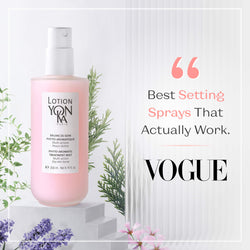
Toning is a misunderstood step. While traditional toners were often alcohol-heavy and drying, our Lotion Yon-Ka PS is a phyto-aromatic mist that is 100% alcohol-free. For dry, peeling skin, use Lotion Yon-Ka PS, designed for dry and sensitive types. This mist "primes" the skin, increasing the absorption of the oils and creams that follow. It provides an immediate burst of hydration and the calming scent of the Quintessence to de-stress the complexion.
Correcting the Flakes with Gommage Yon-Ka
If the peeling is particularly noticeable and you must remove some of the dead skin for a special occasion or to help products penetrate, avoid "scrubs" with pits or beads. Instead, use a "gommage"—a French word for "erasing." Gommage Yon-Ka is a grain-free, botanical peel that uses carob and lime oil to gently dissolve the bonds of dead skin. You apply it as a gel, let it set slightly, and then "roll" it off with your fingertips. This method is far safer for a compromised barrier than traditional exfoliation.
Intensive Repair with Hydra n°1 Crème
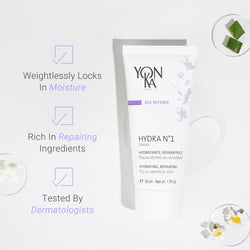
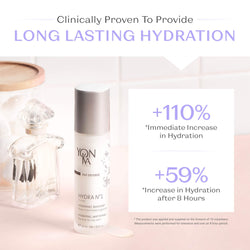
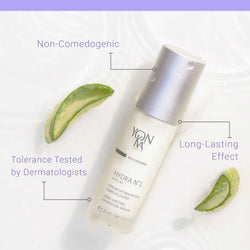
To truly heal the peel, you need a high-performance moisturizer. Hydra n°1 Crème is specifically engineered for dehydrated and dry skin. It features two weights of hyaluronic acid: one to hydrate the surface and another to support the deeper layers. Combined with shea butter and hazelnut oil, it creates a protective cocoon that prevents Transepidermal Water Loss (TEWL).
Note: When introducing these botanical formulas, we always recommend a patch test on the inner forearm for 24 hours, especially if your skin is currently in a reactive, peeling state. While our essential oils are pure and active, sensitive skin should always be introduced to new rituals gradually.
Essential Ingredients for Barrier Restoration
When reading labels to help heal your face, look for these key "barrier-builders" which we prioritize in our professional formulations:
- Hyaluronic Acid: A humectant that can hold up to 1,000 times its weight in water. It is essential for "plumping" the skin and smoothing out the appearance of fine lines caused by dehydration.
- Squalane: A lipid that mimics the skin's natural sebum. It provides a weightless veil of protection without clogging pores.
- Vegetal Glycerin: A classic but powerful humectant that draws moisture from the air into the skin.
- Ceramides: These are the essential fats that make up the skin barrier. Without them, the skin cannot effectively "seal" itself.
- Omega Fatty Acids: Found in Serum Omega, these are crucial for repairing the lipid matrix. If your peeling is accompanied by a feeling of "rawness," an oil-based serum can provide immediate relief.
Advanced Strategies: The Weekly Recovery Mask
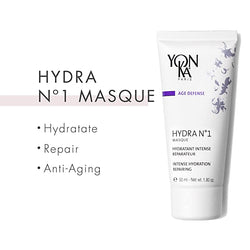
Sometimes, daily moisturizing isn't enough to stop a severe peel. In these cases, a "flash" treatment or an overnight mask can provide the intensive care needed. Hydra N°1 Masque is a savior for peeling skin. It is an "SOS" treatment that can be applied in a thick layer for 10 minutes or left on overnight.
Using an overnight mask allows the skin to repair itself during its most active phase—the sleep cycle. During sleep, blood flow to the skin increases and the body focuses on cellular repair. By providing a rich supply of vitamins (A, C, E, and B5) and the soothing extracts of aloe vera and jojoba, you support the skin's natural healing timeline.
Myth vs. Fact: Navigating Peeling Skin Advice
Myth: "You should use a face oil as your only moisturizer to stop peeling." Fact: Oils are occlusive (they seal moisture in) and emollient (they smooth the surface), but they do not always contain humectants (which add water). For peeling skin, you need a combination of water-based hydration (like a serum) and oil-based protection (like a cream or oil) to truly heal.
Myth: "Peeling skin is just dead skin, so you should scrub it off so the new skin can breathe." Fact: Peeling skin is often still partially attached to healthy, living cells. Ripping it off prematurely creates an open wound in the barrier, leading to more peeling and potential infection.
Lifestyle Adjustments to Support Healing
Your internal environment is just as important as the products you apply topically. To speed up the healing process of peeling facial skin:
- Hydrate from within: While the "eight glasses of water" rule is debated, systemic dehydration definitely shows up on the skin. Eat water-rich foods like cucumber, celery, and watermelon.
- Invest in a Humidifier: If you live in a dry climate or use climate control, a humidifier in the bedroom can significantly reduce morning tightness and flaking.
- Sun Protection is Non-Negotiable: Peeling skin is "new" skin, which is much more susceptible to UV damage. Use a broad-spectrum mineral sunscreen daily to protect the healing area.
- Monitor your Diet: Essential fatty acids found in walnuts, flaxseeds, and fatty fish help support the skin's lipid production from the inside out.
When to See a Physician or Dermatologist
While most cases of peeling skin are temporary reactions to weather or products, persistent flaking can sometimes indicate a medical concern. It is important to consult a healthcare professional if:
- The peeling is accompanied by intense itching that keeps you awake at night.
- You see signs of infection, such as yellow crusting, oozing, or pus.
- The skin is hot to the touch or there is significant swelling.
- The peeling is persistent and does not improve after two weeks of a gentle, hydrating ritual.
- You suspect an underlying condition like rosacea, seborrheic dermatitis, or psoriasis, which require specific medical management beyond cosmetic skincare.
Professional Spa Support for Deep Healing
For those struggling with chronic dryness or a particularly stubborn period of peeling, a professional treatment can provide results that are difficult to achieve at home. Over 7,000 skincare professionals worldwide trust Yon-Ka Paris protocols because they are designed to be both effective and deeply restorative.
A professional Le Grand Classique treatment, for example, includes a deep but gentle cleansing and long-lasting hydration steps that are customized by an aesthetician to your specific skin state. Professionals have access to higher-potency botanical concentrates and specialized massage techniques that improve lymphatic drainage and blood flow, bringing fresh nutrients to the healing skin. You can find a certified partner near you through our Spa Locator.
Conclusion
Healing dry, peeling skin on the face is an exercise in patience and botanical precision. It is a time to move away from aggressive "hacks" and toward a ritual that respects the skin's natural biology. By pausing irritants, embracing gentle cleansing with Lait Nettoyant, and flooding the skin with the lipid-rich protection of the Hydra n°1 range, you can transform a flaky, uncomfortable complexion back into one that feels resilient and radiant.
- Stop all exfoliants and retinoids immediately.
- Switch to lukewarm water and milk-based cleansers.
- Layer hydration: Mist, Serum, and a rich Moisturizer.
- Protect the "new" skin with daily SPF.
Key Takeaway: Real skincare is not about forcing the skin to change; it is about providing the botanical tools it needs to heal itself.
At Yon-Ka Paris, we remain committed to the belief that every person deserves a skincare ritual that is as effective as it is sensorial. Founded on 70 years of phyto-aromatic expertise, our formulas are designed to bring the skin back into its natural state of harmony. If you are unsure which specific products are right for your current skin state, we invite you to take our Skin Diagnosis quiz or use the Product Matcher on our website.
FAQ
Can I use makeup over peeling skin?
It is best to avoid makeup on peeling areas, as pigments can cling to the flakes and make them more noticeable. If you must wear makeup, choose a cream-based, hydrating formula and apply it with a damp sponge using a "stippling" or patting motion rather than rubbing.
How long does it take for peeling skin to heal?
Typically, if the cause is a mild sunburn or a reaction to a product, the skin will finish shedding and reveal a healthy new layer within three to seven days. If the peeling is due to chronic dryness or a compromised barrier, it may take a full 28-day skin cycle of consistent hydration to see complete restoration.
Is coconut oil good for peeling skin on the face?
While coconut oil is a popular home remedy, it is highly comedogenic (pore-clogging) for many people. It also lacks the humectants needed to actually add water to the skin. It is better to use products containing squalane or jojoba oil, which more closely mimic the skin's natural oils without causing breakouts.
Does drinking more water stop my face from peeling?
Drinking water supports overall health, but it cannot "fix" a damaged skin barrier on its own. While systemic dehydration can make peeling worse, you must also address the topical barrier by applying humectants and occlusives to stop water from evaporating off the surface of your face.