Table of Contents
- Introduction
- The Unique Needs of a Dry Complexion
- Determining the Ideal Frequency
- Signs You Might Be Over-Washing
- Choosing the Right Cleansing Texture
- The Yon-Ka Ritual for Dry Skin
- Special Considerations for Environment and Lifestyle
- Professional Care and Deep Cleansing
- Common Myths About Washing Dry Skin
- Conclusion
- FAQ
Introduction
If you have ever experienced that uncomfortable, "two-sizes-too-small" sensation after cleansing your face, you are likely navigating the delicate world of dry skin. While cleansing is the foundation of every healthy skincare routine, for those with a dry complexion, it can feel like a risky trade-off between cleanliness and comfort. At Yon-Ka Paris, we believe that your cleansing ritual should never be a source of depletion. This article explores the ideal frequency for washing dry skin, the science behind moisture retention, and how to choose formulas that respect your skin's natural barriers. We will cover the specific needs of your skin throughout the day, how to adjust your routine for seasonal changes, and how to identify the signs of over-cleansing. Finding the perfect balance is essential to maintaining a radiant, supple appearance without compromising your skin's health.
Quick Answer: For most individuals with dry skin, washing with a gentle cleanser once a day—specifically in the evening—is often sufficient. In the morning, a simple rinse with lukewarm water or a hydrating mist like Lotion Yon-Ka PS can refresh the skin without stripping essential lipids.
The Unique Needs of a Dry Complexion
To understand how often to wash, we must first understand what dry skin lacks. Unlike oily skin, which produces an abundance of sebum (natural oil), dry skin is genetically predisposed to produce fewer lipids. These lipids are the "mortar" between your skin cells, creating a protective wall called the skin barrier.
When this barrier is intact, it locks in moisture and keeps out environmental irritants. When it is compromised—often by harsh weather or over-zealous cleansing—moisture evaporates, leading to flaking, dullness, and a rough texture. The goal of a dry skin routine is to remove impurities like pollution, sweat, and makeup without disturbing this vital lipid layer.
Dry Skin vs. Dehydrated Skin
It is important to distinguish between dry skin (a skin type lacking oil) and dehydrated skin (a temporary condition lacking water). Dry skin usually feels tight all over and may look matte or flaky. Dehydrated skin can happen to anyone—even those with oily skin—and often presents as fine "crepe-like" lines or a lack of "bounce." Both concerns benefit from a reduced cleansing frequency and a focus on barrier-respecting formulas.
Determining the Ideal Frequency
The general consensus among skincare professionals is that once or twice a day is the standard. However, for a dry skin type, the "once-a-day" rule is often the most beneficial approach.
The Essential Evening Cleanse
If you only use a cleanser once, it must be in the evening. Throughout the day, your skin accumulates a "film" of environmental pollutants, dust, SPF, and potentially makeup. These impurities do not simply sit on the surface; they can mix with your skin's natural oils and, if left overnight, may lead to irritation or the appearance of premature aging.
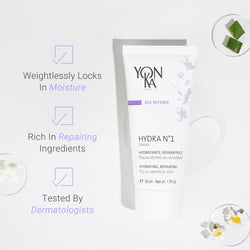
A thorough evening cleanse prepares your skin for the regenerative process that happens while you sleep. By removing the day's debris, you allow your nighttime treatments, such as Hydra n°1 Crème or a nourishing oil like Serum Omega, to penetrate more effectively.
The Morning Refresh
In the morning, the situation is different. Unless you have been "slugging" (applying heavy occlusive ointments) or using very rich night creams that haven't absorbed, your skin is relatively clean. Over-washing in the morning can strip the beneficial oils your skin produced overnight.
For many, a splash of lukewarm water is enough to wake up the skin. If you feel you need more, we recommend using a phyto-aromatic mist. Lotion Yon-Ka PS is an alcohol-free toner designed specifically for dry skin. It features our signature Quintessence—a blend of lavender, geranium, rosemary, cypress, and thyme—to revitalize and prep the skin for hydration without the need for a traditional wash.
Signs You Might Be Over-Washing
Over-cleansing is one of the most common mistakes in skincare. It can lead to a cycle where the skin becomes increasingly reactive and sensitive. Watch for these signals that your frequency or product choice might be too aggressive:
- Post-Wash Tightness: If your skin feels "squeaky clean" or tight within ten minutes of drying, your cleanser is likely stripping your natural lipids.
- Redness and Sensitivity: A compromised barrier allows irritants to enter more easily, leading to a stinging sensation when you apply your usual moisturizer.
- Rebound Oiliness: Interestingly, dry skin can sometimes overcompensate for being stripped by producing a sudden burst of oil, leading to an "oily but tight" feeling.
- Persistent Flaking: While dry skin can naturally flake, excessive peeling or rough patches can be a sign that you are washing away your skin's protective "glue."
Key Takeaway: Your skin should feel soft and comfortable immediately after cleansing. If it feels parched, consider switching to a milk-based cleanser or reducing your morning routine to a water-only rinse.
Choosing the Right Cleansing Texture
The frequency of washing matters, but the how is just as important. For dry skin, the texture of your cleanser is a game-changer.
The Power of Cleansing Milks
Milk cleansers, such as Lait Nettoyant, are the gold standard for dry and sensitive skin types. Unlike foaming gels that use surfactants to create bubbles—which can often be too harsh—milks use oils and emollients to dissolve dirt. Lait Nettoyant is a 2-in-1 milk that cleanses and removes makeup while respecting the hydrolipidic film. It leaves the skin feeling silky and hydrated rather than stripped.
The Role of Double Cleansing
If you wear long-wear makeup or mineral sunscreen, a single pass with a gentle milk might not be enough. In this case, we suggest a double-cleanse method at night.
- Step 1: Use an oil-based cleanser or a generous amount of cleansing milk on dry skin to break down oil-soluble impurities.
- Step 2: Follow with a second application of your milk cleanser or a very gentle cream wash to ensure all residue is removed.
Note: When introducing a new product like a cleansing oil or a botanical milk, we recommend a patch test on your inner forearm for 24 hours to ensure your skin enjoys the essential oils and plant actives.
The Yon-Ka Ritual for Dry Skin
At Yon-Ka, we view skincare as a ritual rather than a chore. For dry skin, this ritual is built on layering moisture from the very first step.
- Cleanse: Use Lait Nettoyant on the face and neck. Use gentle, circular motions with your fingertips. This not only cleanses but stimulates microcirculation, bringing a natural glow to dry, dull skin.
- Mist: Immediately after drying, spray a generous amount of Lotion Yon-Ka PS. This "healing water" rebalances the skin's pH and acts as a humectant, pulling the moisture from your next products deeper into the skin.
- Treat: Apply a targeted booster. For extreme dryness, Nutri+ Booster can be mixed into your cream to add a dose of nourishing antioxidants and vitamins.
- Moisturize: Finish with a rich, protective cream like Hydra n°1 Crème. This provides long-lasting hydration and helps repair the skin barrier.
Special Considerations for Environment and Lifestyle
Your skin's needs are not static. They change based on where you are and what you are doing.
Post-Workout Cleansing
Sweat is primarily water and salt, but it can also trap bacteria and oils on the skin. If you exercise, you should always wash your face afterward, regardless of the time of day. For dry skin, try to keep this extra wash as gentle as possible. If you are at the gym, carrying a travel-sized Lait Nettoyant is a better option than using the harsh soaps often found in locker rooms.
Seasonal Adjustments
In the winter, low humidity and indoor heating act like a vacuum, pulling moisture out of your skin. During these months, you may want to strictly adhere to the once-a-day cleansing rule. In the summer, if you are sweating more or using more sunscreen, you might find that a very gentle morning cleanse with a product like Nude Perfect Fluide helps keep your pores clear without drying you out.
The Danger of Hot Water
Regardless of how often you wash, the temperature of the water is critical. Hot water is a solvent; it dissolves the very oils your dry skin is desperately trying to hold onto. Always use lukewarm or cool water. This preserves your lipid barrier and helps prevent the redness often associated with dry, reactive skin.
Professional Care and Deep Cleansing
While home care is vital, dry skin can benefit immensely from professional treatments. In a spa setting, an esthetician can perform a deep "Le Grand Classique" facial—a cornerstone of Yon-Ka expertise. This treatment includes a gentle, professional-grade exfoliation using Gommage Yon-Ka, a grain-free peel that removes dead cells without the friction that can irritate dry skin.
Exfoliation is often the "missing link" for dry skin. When dead cells build up on the surface, your moisturizers cannot penetrate effectively. By using a gentle, botanical exfoliator once or twice a week at home, you ensure that your skin remains receptive to hydration. To find more face exfoliators, explore our exfoliation collection.
Common Myths About Washing Dry Skin
Myth: You need a "squeaky clean" feeling to know your face is clean.
Fact: That squeaky feeling is actually the sound of your skin's protective oils being missing. For dry skin, a "conditioned" or "plump" feel is the goal.
Myth: Toners are only for oily skin and will dry you out further.
Fact: While old-fashioned, alcohol-heavy toners were drying, modern phyto-aromatic mists like Lotion Yon-Ka PS are specifically formulated to hydrate and soothe.
Myth: Washing your face in the shower is bad for your skin.
Fact: It is not the shower itself, but the temperature and the pressure. If you wash your face in the shower, ensure the water is lukewarm and avoid letting the high-pressure spray hit your face directly, as this can cause broken capillaries in thin, dry skin.
Conclusion
Consistency is the key to transforming dry skin from brittle and tight to soft and luminous. By limiting your deep cleanse to once a day—ideally in the evening—and using barrier-respecting, botanical formulas, you give your skin the space it needs to repair itself. Remember that your skin is a living organ that responds to your environment, your stress levels, and your touch. Treat it with the gentle care it deserves, and it will reward you with a healthy, youthful glow.
If you are still unsure which cleansing ritual is right for your specific needs, we invite you to take a closer look at our moisturizers collection. This is designed to help you find the perfect match for your unique complexion.
At Yon-Ka Paris, our mission is to provide you with a sensorial journey that marries the rigor of science with the soul of nature. Our rituals are more than just skincare; they are a daily invitation to pause, breathe in the therapeutic aromas of the Quintessence, and honor the skin you are in. We invite you to learn more about our ingredients and our formulas to understand the philosophy behind every ritual.
FAQ
Is it okay to skip washing my face in the morning if I have dry skin?
Yes, skipping a full cleanser in the morning is often recommended for dry skin types. A simple rinse with lukewarm water or a few pumps of a hydrating mist like Lotion Yon-Ka PS is usually enough to refresh the skin. This approach preserves the beneficial natural oils your skin produced while you slept, preventing unnecessary tightness.
Can I use a foaming cleanser if my skin is dry?
While many foaming cleansers contain harsh sulfates like SLS that can strip dry skin, some modern formulas are much gentler. However, for most dry skin types, a cream or milk cleanser like Lait Nettoyant is a safer choice because it cleanses using emollients rather than bubbles. If you prefer a foam, ensure it is specifically labeled as "hydrating" or "soap-free."
Should I wash my face more often in the winter?
Actually, you should typically wash less or more gently in the winter. Cold air and indoor heating significantly reduce the humidity around your skin, making it more prone to dehydration and cracking. During the winter, focus on a single, nourishing evening cleanse and prioritize rich moisturizers and oils to protect your barrier from the elements.
What should I do if my skin feels tight immediately after washing?
If your skin feels tight, it is a clear sign that your cleanser is too aggressive or your water is too hot. First, try lowering the water temperature to lukewarm. If the tightness persists, switch to a non-foaming milk or oil cleanser. Always follow cleansing immediately with a hydrating mist and moisturizer to "trap" moisture on the skin's surface.