Table of Contents
- Introduction
- What Does It Mean to Over Moisturize Your Skin?
- The Difference Between Dry and Dehydrated Skin
- Common Signs of Over-Moisturization
- Why More Isn't Always Better: The Science of Barrier Function
- The Phyto-Aromatic Approach to Balanced Hydration
- How to Properly Moisturize Dry Skin Without Overdoing It
- Seasonal Adjustments: Keeping Your Ritual Relevant
- Essential Oil Safety and Sensoriality
- When to See a Professional
- Conclusion
- FAQ
Introduction
When your skin feels tight, flaky, or uncomfortably parched, the natural instinct is to reach for the richest cream you can find and apply it generously. We often equate more product with better results, chasing that elusive "glass skin" glow through layers of serums, oils, and balms. However, even the most well-intentioned routine can sometimes backfire. At Yon-Ka Paris, we believe that skincare is an art of precision and balance rather than excess. While hydration is the foundation of a healthy complexion, it is indeed possible to overwhelm your skin’s natural ecosystem. This article will explore the nuances of over-moisturizing dry skin, how to recognize the warning signs, and how to build a phyto-aromatic ritual that provides exactly what your skin needs—and nothing it doesn't. Achieving a radiant look is about consistency and quality, not just quantity.
Quick Answer: Yes, you can over-moisturize dry skin. Applying excessive amounts of heavy products can lead to clogged pores, milia, and a disrupted skin barrier, potentially making your skin look dull or congested rather than hydrated.
What Does It Mean to Over Moisturize Your Skin?
To understand how we can "overdo" it, we first have to look at how the skin absorbs products. Your skin's outermost layer, the stratum corneum, acts as a protective barrier. It is composed of skin cells held together by a "mortar" of lipids (fats). When we apply a moisturizer, we are providing humectants to draw in water, emollients to smooth the surface, and occlusives to lock everything in.
However, the skin has a limited capacity for absorption. Think of your skin cells like tiny sponges. Once a sponge is fully saturated, any additional water simply sits on the surface. When you apply too much moisturizer—or use a formula that is far too heavy for your current skin state—the excess product can sit on top of the skin. This can lead to a "waterlogged" effect where the cells swell excessively, which can actually weaken the structural integrity of the skin barrier over time.
Instead of supporting the skin, an over-abundance of product can trap dead skin cells, sweat, and environmental pollutants against the surface. This creates a breeding ground for congestion, even if your underlying skin type is technically dry.
The Difference Between Dry and Dehydrated Skin
One of the most common reasons people over-moisturize is that they misidentify their skin’s needs. Understanding the difference between dry and dehydrated skin is crucial for choosing the right ritual.
- Dry Skin (Alipic): This is a skin type characterized by a lack of oil (sebum). Dry skin often feels rough, looks flaky, and has very small pores. It needs lipids and oils to replenish the missing "glue" in its barrier.
- Dehydrated Skin: This is a temporary skin condition characterized by a lack of water. Even oily skin can be dehydrated. It often feels tight, looks dull, and may show fine "crepe-like" lines. It needs humectants like hyaluronic acid to bind water to the cells.
If you have oily but dehydrated skin and you apply a heavy, oil-rich cream designed for very dry skin, you aren't actually solving the water deficit. Instead, you are adding excess oil that your skin doesn't need, leading to the appearance of over-moisturization—shining on the surface while feeling tight underneath. At Yon-Ka, we prioritize identifying these nuances so your ritual can be targeted and effective.
Common Signs of Over-Moisturization
How do you know if your "more is more" approach has gone too far? Your skin is excellent at communicating its status through various visual and tactile cues.
1. Persistent Congestion and Breakouts
If you normally have clear, dry skin but suddenly start seeing small whiteheads or "clogged" pores, your moisturizer might be the culprit. When too much product sits on the surface, it can mix with dead skin cells and plug the pore opening. This is especially common if you are using occlusive ingredients like heavy butters or waxes in a climate that doesn't require them.
2. The Appearance of Milia
Milia are those tiny, hard, white bumps that often appear around the eyes or on the cheeks. They aren't traditional acne; rather, they are small cysts filled with keratin that have become trapped under the skin’s surface. Over-moisturizing with heavy creams can frequently trigger milia, as the excess product prevents the natural shedding of skin cells.
3. A Shiny but Uncomfortable Surface
Healthy, moisturized skin has a soft, velvety glow. Over-moisturized skin often looks "greasy" or plasticky. You might notice that your skin feels oily to the touch, yet if you move your face, it still feels "tight" or "thin" underneath that oily film. This is a classic sign that your products are sitting on top of the skin rather than absorbing into the deeper layers.
4. Product Pilling
If you notice that your moisturizer or foundation is "balling up" into small crumbs when you apply it, your skin has likely reached its saturation point. This "pilling" happens when the skin can no longer absorb the product, and the excess begins to stick to itself or the next layer you apply.
5. Increased Sensitivity or Redness
While it sounds counterintuitive, too much moisture can sometimes lead to irritation. When the skin barrier is constantly "waterlogged," its defensive functions can weaken. This makes it easier for irritants to penetrate the skin, leading to unexpected redness or a stinging sensation when you apply your usual products.
Why More Isn't Always Better: The Science of Barrier Function
The skin is a living, self-regulating organ. Its primary job is to keep "good" things (like water) in and "bad" things (like bacteria and pollution) out. When we provide a constant, heavy blanket of occlusive moisturizer, we can unintentionally disrupt this balance.
Myth: Using a lot of moisturizer will make your skin stop producing its own oil. Fact: While "lazy skin" is a common term used in beauty circles, your sebaceous glands are largely regulated by hormones, not by how much cream you apply. However, over-moisturizing can lead to a decrease in the production of natural moisturizing factors (NMFs) and lipids within the skin's barrier, as the skin begins to rely on the external "crutch" provided by the product.
The goal of any high-quality moisturizer, such as those in our Age Defense or Age Correction ranges, is to support the skin’s natural functions, not replace them. By providing the skin with the right bio-available ingredients, we encourage it to maintain its own health and resilience.
The Phyto-Aromatic Approach to Balanced Hydration
Our philosophy is rooted in the "Quintessence"—an exclusive complex of five essential oils: lavender, geranium, rosemary, cypress, and thyme. This 100% natural and active core does more than just provide a beautiful scent; it helps to balance, revitalize, and prepare the skin to receive hydration effectively.
Instead of relying on one heavy cream to do all the work, we advocate for a layered ritual. This approach ensures that each product is absorbed efficiently, preventing the buildup that leads to over-moisturization. To see how our formulation philosophy supports that approach, explore our ingredients and our formulas.
The Foundation: Preparation
Before applying any hydration, the skin must be receptive. We recommend starting with a gentle, barrier-respecting cleanser like Lait Nettoyant. This milk cleanser removes impurities without stripping the delicate lipid layer.
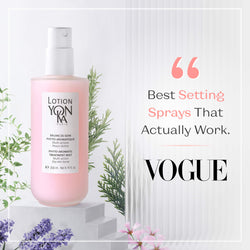
Following cleansing, the most critical step for dry or dehydrated skin is the "mist." Lotion Yon-Ka PS is not just a toner; it is a phyto-aromatic healing water. It drenches the skin in hydration and essential oils, acting as a "conductor" that helps subsequent creams and serums penetrate deeper and more evenly. This often means you need less moisturizer because the skin is already pre-drenched and ready to absorb.
Targeted Treatments
For those with dry skin that still feels parched, adding a booster can provide concentrated nutrients without the heaviness of a thick balm. Booster Nutri + is a nourishing oil-based elixir that can be mixed into your cream. This allows you to customize the richness of your moisturizer day by day, depending on your skin’s actual needs.
How to Properly Moisturize Dry Skin Without Overdoing It
Finding your "Goldilocks" amount of moisturizer takes a bit of mindfulness. Here is how we recommend approaching your daily hydration:
Step 1: Assess Your Skin Every Morning
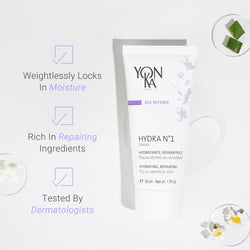
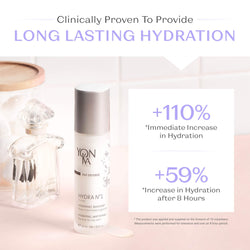
Your skin's needs change based on your sleep, your diet, and even your stress levels. Before applying your ritual, look in the mirror. Does your skin look dull and tight? It might need an extra drop of Booster Nutri +. Does it look calm and soft? Perhaps just a thin layer of Hydra N°1 Crème is enough.
Step 2: Use the Right Amount
A general rule of thumb is to use a pea-sized amount of moisturizer for your entire face. If your skin is extremely dry, you might go up to a nickel-sized amount. Warm the product between your fingertips first; this "melts" the botanical waxes and oils, making the product much easier to spread in a thin, even layer.
Step 3: Technique Matters
Instead of rubbing vigorously, which can irritate dry skin, try a "press and roll" motion. Press your palms against your cheeks, forehead, and chin, then gently roll them away. This helps the skin "drink" the product without causing friction.
Step 4: Don't Forget Exfoliation
Sometimes, what feels like "dry skin" is actually a buildup of dead skin cells that have become "stuck" on the surface. If you apply moisturizer on top of this buildup, it can't reach the living cells underneath, leading to that greasy-on-the-surface, dry-underneath feeling. Using a gentle, grain-free exfoliator like Gommage Yon-Ka once or twice a week clears the path for your moisturizer to work effectively.
Bottom line: Effective moisturization is about the quality of the formula and the preparation of the skin, not the thickness of the layer you apply.
Seasonal Adjustments: Keeping Your Ritual Relevant
Just as you change your wardrobe for the seasons, your skincare ritual must adapt. This is the most common time people find themselves over-moisturizing.
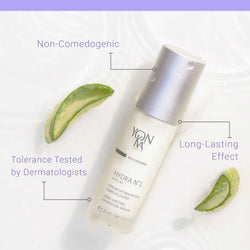
- In the Winter: The air is dry, and indoor heating strips moisture from the skin. This is the time for richer textures like Hydra N°1 Crème and perhaps the addition of Serum Omega for lipid restoration.
- In the Summer: Humidity levels are higher, and your skin naturally produces more oil. If you continue using your heavy winter cream in July, you will likely experience congestion. This is the time to switch to a lighter fluid or gel, such as Hydra N°1 Fluide or the blurring Nude Perfect Fluide.
By listening to your skin and the environment, you prevent the "buildup" that occurs when your products are too heavy for the current climate.
Essential Oil Safety and Sensoriality
Because our formulas rely heavily on the power of essential oils and plant extracts, we always advocate for a mindful introduction of new products. Essential oils are highly active and provide both skin-level benefits and aromachological effects (influencing your mood and wellbeing).
Note: When introducing a new active product to your ritual, we recommend performing a patch test on your inner forearm for 24 hours. While a slight, temporary tingling sensation is normal with active essential oils—indicating the phyto-aromatic ingredients are working—persistent redness or irritation is a sign to reduce the frequency of use or consult a professional.
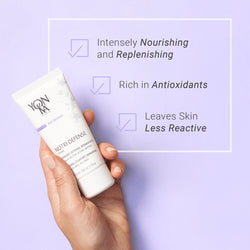
If you have highly reactive skin, you may want to explore Sensitive Creme, which is specifically designed to soothe while it hydrates.
When to See a Professional
While most cases of over-moisturization can be fixed by simplifying your routine and choosing better-suited products, some skin concerns require an expert eye. If you are dealing with persistent cystic acne, suspected rosacea, or sudden, painful changes in your skin's texture, it is always best to consult a dermatologist.
For those looking for a personalized adjustment to their ritual, a visit to a Yon-Ka partner spa can be transformative. Our professional estheticians are trained to analyze your skin’s "thirst" and lipid levels with precision. They can provide deep-cleansing treatments and professional-grade hydration masks that reset your skin, making your at-home ritual more effective. You can find a nearby expert through our Spa Locator or explore Spa Treatments.
Conclusion
Moisturizing is not a "more is better" endeavor. It is a delicate ritual designed to support, nourish, and protect your skin's natural brilliance. By choosing high-quality, botanical-based formulas and paying close attention to your skin's daily feedback, you can avoid the pitfalls of over-moisturization. Remember that healthy skin is balanced skin—not too dry, not too greasy, but supple and glowing with vitality.
If you are unsure where to start on your journey to balanced hydration, we invite you to learn more about our ingredients or use our formulas. These resources are designed to help you find the specific phyto-aromatic solutions your skin is asking for. At Yon-Ka Paris, our mission for over 70 years has been to bridge the gap between science and nature, providing you with a ritual that is as effective as it is sensorial.
Key Takeaway: Over-moisturizing dry skin often results from using the wrong product weight or skipping the essential "mist" and "exfoliation" steps that ensure proper absorption. A balanced, layered ritual is more effective than a single thick layer of cream.
FAQ
Can too much moisturizer cause acne on dry skin?
Yes, it can. When excessive moisturizer sits on the surface of dry skin, it can trap dead skin cells and environmental debris, leading to clogged pores and breakouts. If you notice new bumps or blackheads, try switching to a lighter formula or reducing the amount of product you use.
Why does my skin feel dry even though I use a lot of moisturizer?
This is often a sign of a buildup of dead skin cells or a mismatch in product type. If your skin is dehydrated (lacking water) rather than dry (lacking oil), a heavy, oil-based cream will just sit on the surface without actually hydrating the cells. Try adding a gentle exfoliator like Gommage Yon-Ka and a hydrating mist like Lotion Yon-Ka to your routine.
How much moisturizer should I actually use for my face?
For most people, a pea-sized amount is sufficient for the entire face. If you have very dry skin or are in a harsh climate, you might increase this to a nickel-sized amount. Warming the product in your hands before pressing it into the skin ensures a thin, even layer that absorbs more efficiently.
What are those tiny white bumps caused by heavy eye cream?
Those are likely milia, which are small keratin-filled cysts. They often occur when a rich, occlusive cream is used on the delicate skin around the eyes, where the pores are smaller and easily overwhelmed. Switching to a lighter eye treatment, such as Phyto-Contour, can help prevent their appearance.