Table of Contents
- Introduction
- The Science of the "Dry Bump"
- Common Causes of Bumpy Texture on Dry Skin
- How to Distinguish Dry Skin Bumps from Acne
- The Yon-Ka Ritual for Smoothing Dry, Bumpy Skin
- Essential Ingredients for Smoothing Dry Bumps
- Essential Oil Safety and Sensorial Wellbeing
- Professional Treatments for Deep Refinement
- Conclusion
- FAQ
Introduction
It is a common misconception that facial bumps are exclusively the domain of oily or acne-prone skin. Many individuals find themselves puzzled when, despite a lack of excess shine, their complexion feels rough, uneven, or peppered with tiny, stubborn elevations. At Yon-Ka Paris, we understand that skin health is rarely a matter of "either/or" regarding dryness and texture. The reality is that a lack of moisture can directly compromise the skin’s ability to shed dead cells, leading to a variety of small, non-inflammatory bumps. By aligning professional phyto-aromatic expertise with your daily routine, you can move toward a complexion that feels as soft as it looks.
In this article, we will explore the biological mechanisms that link dryness to surface irregularities, identify common conditions like keratosis pilaris and milia, and provide a botanical ritual to restore smoothness. By aligning professional phyto-aromatic expertise with your daily routine, you can move toward a complexion that feels as soft as it looks.
Quick Answer: Yes, dry skin can cause bumps on the face. When the skin lacks moisture, the natural exfoliation process slows down, leading to a buildup of dead skin cells that can clog pores or trap keratin, resulting in texture issues like milia, keratosis pilaris, or dry-skin breakouts.
The Science of the "Dry Bump"
To understand how a lack of oil or water can lead to a bumpy surface, we must look at the process of desquamation. Desquamation is the natural process by which your skin sheds dead cells to make room for new ones. In healthy, hydrated skin, these dead cells detach easily and invisibly. However, when the skin barrier is dry or dehydrated, the enzymes responsible for breaking the "glue" between these cells cannot function correctly.
Dead skin cells begin to accumulate on the surface rather than shedding. This creates a "lid" of dry debris over the pores. Even if your skin does not produce much sebum (oil), what little is produced can become trapped beneath this layer, forming small, flesh-colored bumps. Furthermore, dry skin is often more reactive and prone to inflammation. A compromised barrier allows irritants to penetrate more deeply, which can trigger the immune system and cause small, red, itchy bumps known as contact dermatitis or irritant reactions.
The Role of the Skin Barrier
The skin barrier, or acid mantle, is a protective film of lipids and moisture. When this barrier is compromised, moisture evaporates quickly—a process known as trans-epidermal water loss (TEWL). This leaves the skin feeling tight and looking flaky. In response to this extreme dryness, the skin may even try to produce "emergency oil," which, when mixed with the excess of dead surface cells, creates a perfect storm for texture issues.
Common Causes of Bumpy Texture on Dry Skin
Not all bumps are created equal. Identifying the specific type of texture you are experiencing is the first step toward selecting the right botanical solution.
Keratosis Pilaris (KP)
Often referred to as "chicken skin," keratosis pilaris appears as small, hard, flesh-colored or slightly red bumps. While most common on the arms and thighs, it frequently appears on the cheeks of those with dry skin.
- The Cause: A buildup of keratin, a structural protein in the skin, which plugs the hair follicle.
- The Connection to Dryness: KP typically worsens in the winter or in low-humidity environments when the skin is at its driest.
Milia
Milia are tiny, firm, pearly-white cysts that appear just under the skin’s surface. They are not pimples and cannot be "popped" because they are not made of sebum or bacteria; they are made of trapped keratin.
- The Cause: Milia often form when the skin’s natural exfoliation process is hindered, or after the use of heavy, occlusive creams that the skin cannot properly absorb.
- The Connection to Dryness: Dry, thickened skin can easily trap these keratin plugs.
Seborrheic Dermatitis
While often associated with oiliness, seborrheic dermatitis can also cause a "dry and oily at the same time" sensation. It often manifests as red, scaly patches with small bumps around the nose, eyebrows, and hairline.
- The Cause: An inflammatory response to a common yeast (Malassezia) that lives on the skin.
- The Connection to Dryness: A weakened barrier makes the skin more susceptible to this irritation, leading to flaking that looks like dry skin but is actually inflammatory.
Comedonal Acne from Dehydration
If you are experiencing traditional-looking "whiteheads" but your skin feels parched, you may be dealing with comedonal acne caused by dehydration. When the surface of the skin is too dry, the pores become narrow and easily blocked by a combination of dry cells and oxidized oil.
Key Takeaway: Bumps on dry skin are usually caused by trapped keratin or dead skin cells rather than the bacterial infections associated with traditional acne.
How to Distinguish Dry Skin Bumps from Acne
It is essential to recognize the difference between a dry-skin texture issue and inflammatory acne (acne vulgaris) to avoid using treatments that might worsen the dryness.
| Feature | Dry Skin Bumps (KP/Milia) | Inflammatory Acne |
|---|---|---|
| Color | Flesh-colored, white, or pearly. | Red, angry, or topped with a yellow pustule. |
| Sensation | Usually painless; may be slightly itchy. | Often tender, sore, or throbbing. |
| Texture | Hard, firm, and sandpaper-like. | Softer or fluid-filled; may be deep and cystic. |
| Location | Often on cheeks, jawline, or outer face. | Common in the T-zone (forehead, nose, chin). |
Note: If your bumps are painful, spreading rapidly, or accompanied by a fever, consult a dermatologist to rule out infections like staph or severe folliculitis.
The Yon-Ka Ritual for Smoothing Dry, Bumpy Skin
Correcting texture on dry skin requires a delicate balance. You must remove the "lid" of dead skin cells without stripping the already-fragile moisture barrier. Our approach focuses on gentle, grain-free exfoliation and deep, lipid-restoring hydration.
Step 1: Barrier-Respecting Cleansing
Avoid harsh, foaming cleansers that leave the skin feeling "squeaky clean," as this indicates a stripped barrier. Instead, use a creamy milk cleanser like Lait Nettoyant. This formula gently removes impurities while maintaining the skin's natural pH and lipid balance.
Step 2: Prepare with a Phyto-Aromatic Mist
The application of Lotion Yon-Ka PS (specifically the PS version for dry skin) is a foundational step in our ritual. This mist features our signature Quintessence—a blend of lavender, geranium, rosemary, cypress, and thyme essential oils. It not only provides immediate hydration but also sanitizes and prepares the skin to better absorb the active ingredients in your serums and moisturizers.
Step 3: Gentle Grain-Free Exfoliation
For those with milia or keratosis pilaris, physical scrubs with harsh beads can cause micro-tears and more inflammation. Gommage Yon-Ka is an ideal solution. This botanical, grain-free "peel" uses carob and lime to gently lift away dead cells.
- How to Use: Apply a thin layer, let it set for a moment, and then gently "roll" it off with your fingertips. This mechanical action removes the dry "lid" causing the bumps without irritation.
Step 4: Targeted Treatment and Lipid Repair
If texture is persistent, a nighttime treatment with alpha-hydroxy acids (AHAs) can support cell turnover. Glyconight 10% Masque is a high-performing glycolic acid mask designed to refine skin texture and diminish the appearance of bumps while you sleep.
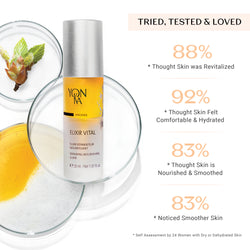
To address the underlying dryness, incorporate a lipid-rich serum like Serum Omega. This oil-in-serum is packed with essential fatty acids that repair the skin barrier, making the surface more supple and less likely to trap keratin.
Step 5: Intense Hydration
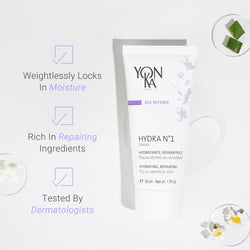
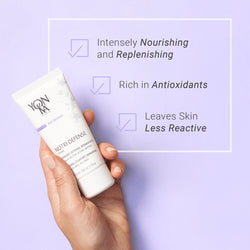
Finally, seal everything in with a high-performance moisturizer. Hydra N°1 Creme is specifically formulated for dry and dehydrated skin. It uses two weights of hyaluronic acid to provide both surface smoothing and deep hydration, which helps to soften the skin so that existing bumps can naturally resolve.
Myth: "I should scrub my bumps away with a loofah or a gritty scrub." Fact: Aggressive physical scrubbing often triggers the skin to produce more keratin as a defense mechanism, making conditions like KP and milia worse. Gentle chemical exfoliation or grain-free peeling is far more effective.
Essential Ingredients for Smoothing Dry Bumps
When browsing for products to address texture on dry skin, look for these key botanical and scientific ingredients:
- Hyaluronic Acid: A humectant (moisture-binder) that plumps the skin and softens the "plugs" causing texture.
- Glycolic Acid (AHA): An exfoliating acid that dissolves the bonds between dead skin cells.
- Lactic Acid: A gentler AHA that exfoliates while also acting as a humectant.
- Urea: A powerful ingredient that softens keratin and helps extremely dry skin shed properly.
- Ceramides: Lipids that act as the "mortar" between your skin cells, preventing the dryness that leads to bumps.
- Niacinamide: Helps soothe inflammation and strengthens the barrier.
Essential Oil Safety and Sensorial Wellbeing
Because our formulas are rooted in aromatherapy and the use of the Quintessence, we prioritize the efficacy and safety of essential oils.
- Patch Test: When introducing a new active product like Glyconight 10% Masque or a product rich in essential oils, we recommend a patch test on your inner forearm for 24 hours.
- Introduce Slowly: Start by using active treatments once or twice a week, gradually increasing frequency as your skin barrier strengthens.
- Sensation: A slight, brief tingling can be normal with essential oils and AHAs, but persistent redness or heat means you should reduce usage or consult a professional.
Professional Treatments for Deep Refinement
Sometimes, the buildup of dead skin is too significant for home care alone. Professional extraction is the only safe way to remove persistent milia, as attempting to pop them at home can lead to scarring and infection.
Visiting a Yon-Ka partner spa allows you to experience the Le Grand Classique treatment. This deep-cleansing facial is a cornerstone of our professional expertise, using a multi-step process of oxygenation, massage, and custom exfoliation to reset the skin. You can find a nearby professional using our Spa Locator.
Bottom line: While dry skin bumps are frustrating, they are usually a sign that your skin's natural renewal process needs a gentle nudge and a significant boost of moisture.
Conclusion
Bumpy texture on a dry complexion is the skin’s way of signaling that it is struggling to maintain its natural rhythm. Whether you are dealing with the pearly deposits of milia or the sandpaper-feel of keratosis pilaris, the solution lies in restoring the moisture barrier and encouraging gentle, consistent cell turnover. By moving away from aggressive "hacks" and embracing a layered, phyto-aromatic ritual, you can achieve a refined and radiant surface.
The Yon-Ka Paris philosophy has always been about the marriage of pharmaceutical rigor and the sensory power of nature. Rooted in 70 years of French heritage, our brand story reminds us that skincare should not only be effective but should also be a moment of daily wellness.
If you are unsure which products are best for your specific texture concerns, we invite you to take our Skin Diagnosis quiz.
You can also use the Product Matcher on our website.
"Skincare is a ritual worth savoring, built on the power of plants and 70 years of phyto-aromatic expertise."
FAQ
Can dehydration cause acne-like bumps on the face?
Yes, dehydration can cause the skin to produce excess oil to compensate for the lack of water, which, when combined with a buildup of dead skin cells, can lead to "dry skin breakouts." These often appear as small whiteheads or closed comedones that feel tight and irritated.
Why do I have tiny white bumps under my skin that won't go away?
These are likely milia, which are small cysts filled with keratin trapped beneath the skin's surface. They are common in individuals with dry skin because the surface cells don't shed quickly enough, and they can be exacerbated by using heavy, occlusive moisturizers that are not compatible with your skin type.
Does drinking more water fix dry skin bumps?
While internal hydration is essential for overall health, it rarely fixes dry skin bumps on its own. You must address the topical moisture barrier with humectants like hyaluronic acid and emollients like plant oils to stop water from evaporating and to soften the skin surface.
Is it okay to use a face scrub if my skin is dry and bumpy?
We generally recommend avoiding harsh physical scrubs with large grains, as they can irritate dry skin and cause more inflammation. Instead, use a grain-free exfoliator like Gommage Yon-Ka or a gentle chemical exfoliant with AHAs to dissolve the dead skin cells more evenly and safely.