Table of Contents
- Introduction
- The Unique Anatomy of the Eye Area
- The Biological Process of Aging
- Environmental and Lifestyle Triggers
- Identifying Your Type of Wrinkles
- The Yon-Ka Phyto-Aromatic Approach to Eye Care
- Building a Ritual for Younger-Looking Eyes
- Key Ingredients to Look For
- Lifestyle Habits for Long-Term Prevention
- The Professional Touch: Spa Treatments
- Conclusion
- FAQ
Introduction
Finding new fine lines in the mirror during your morning ritual can be a surprising moment. You might notice them first while smiling at a friend or catching your reflection in the afternoon sun—those delicate "laugh lines" or "crow’s feet" that seem to have appeared overnight. While these lines are often beautiful markers of a life filled with expression, it is natural to wonder why they form so much earlier and more prominently than wrinkles elsewhere on the face. At Yon-Ka Paris, our brand story begins with understanding the unique biology of your skin. This article will explore the anatomical and lifestyle factors that contribute to eye area aging and how a consistent, phyto-aromatic approach can help support a smoother, more radiant appearance. By combining professional-grade botanicals with mindful habits, you can honor your skin’s journey while maintaining its youthful vitality.
The Unique Anatomy of the Eye Area
To answer the question of why wrinkles form around the eyes, we must first look at how this skin differs from the rest of your face. The skin in the periorbital area—the region immediately surrounding your eyes—is remarkably distinct. It is the thinnest skin on your entire body, measuring roughly 0.2mm to 0.5mm in thickness, compared to about 1.5mm to 2.0mm on your cheeks or forehead.
Because this skin is so delicate, it lacks the "cushioning" found elsewhere. There is very little subcutaneous fat in this area, which means there is less structural support to prevent the skin from folding. Furthermore, the eye area has fewer sebaceous (oil) glands. These glands produce sebum, the skin’s natural moisturizer that helps maintain the barrier and keep the surface supple. Without a robust supply of natural oils, the skin around the eyes is more prone to dehydration, which makes fine lines look more pronounced.
Finally, consider the muscle activity. The orbicularis oculi is the circular muscle that controls your eyelids and allows you to blink, squint, and smile. This muscle is in constant motion—we blink roughly 15,000 to 20,000 times a day. This repetitive mechanical stress, combined with the thinness of the skin, creates the perfect environment for creases to develop over time.
The Biological Process of Aging
As we move through our 20s and into our 30s, the internal mechanisms that keep skin looking "bouncy" and firm begin to slow down. This is a natural biological progression, but its effects are often visible first around the eyes.
The Decline of Collagen and Elastin
Collagen is the primary structural protein in our skin, acting like the "scaffolding" that keeps it firm. Elastin is the protein that allows skin to "snap back" into place after we smile or squint. Starting in our mid-20s, our body’s production of these proteins decreases by about 1% each year. In the eye area, where collagen is already sparse due to the skin's thinness, this decline causes the skin to lose its resilience. When the skin loses its ability to bounce back, the folds created by facial expressions begin to stay behind as permanent lines.
Slower Cell Turnover
In our youth, skin cells regenerate quickly, bringing fresh, plump cells to the surface. As we age, this "turnover" process slows down. Dead skin cells can linger longer on the surface, leading to a texture that looks duller and more prone to showing fine lines. This slowed renewal also means the skin is slower to repair itself from environmental stressors.
Environmental and Lifestyle Triggers
While biology sets the stage, external factors often determine the depth and speed at which wrinkles appear. These are known as "extrinsic" aging factors, and many of them are within our control.
The Impact of UV Radiation
Sun exposure is responsible for a significant portion of visible skin aging. Ultraviolet (UV) rays penetrate deep into the dermis, where they break down existing collagen and elastin fibers. Because the eye area is so thin, UV damage occurs more rapidly here than on the rest of the face. This process, known as photoaging, leads to a "crepey" texture and deeper wrinkles. For daytime defense, explore our sun care collection.
The Role of Blue Light
In our modern world, we are constantly exposed to High Energy Visible (HEV) light, or blue light, from smartphones, tablets, and computer screens. Emerging research suggests that prolonged blue light exposure can contribute to oxidative stress in the skin, similar to UV rays. Additionally, the "tech squint" we often do when reading small text on a screen adds to the repetitive muscle movements that etch lines into the skin.
Dehydration and Diet
Skin that lacks moisture is less elastic. When the body is dehydrated, the skin can appear "sunken" and thin, which emphasizes every tiny crease. Similarly, a diet high in sugar can lead to a process called glycation. This occurs when sugar molecules attach to collagen fibers, causing them to become stiff and brittle rather than flexible and strong.
Key Takeaway: Under-eye wrinkles are the result of a combination of thin skin anatomy, repetitive muscle movement, and the natural decline of structural proteins, all of which are accelerated by sun exposure and lifestyle habits.
Identifying Your Type of Wrinkles
Not all wrinkles are created equal. Identifying which type you are seeing can help you choose the right approach for your ritual. If you want a deeper explanation of the causes, read our guide on what causes wrinkles around your eyes.
- Dynamic Lines: These are the lines that appear only when you are making an expression, such as smiling or squinting. They disappear once your face is at rest.
- Static Wrinkles: These lines remain visible even when your facial muscles are completely relaxed. They are the result of long-term damage to the skin's structure.
- Fold Lines: These are often deeper creases caused by the natural sagging of facial structures over time, such as the hollows that can form under the eyes (the tear troughs).
The Yon-Ka Phyto-Aromatic Approach to Eye Care
Our philosophy is rooted in the belief that the skin should be supported, not forced. We use the power of phytotherapy (plant-based ingredients) and aromatherapy to address the appearance of aging while providing a sensorial experience that reduces the stress which can contribute to "worry lines." To learn more about the philosophy behind our formulas, you can explore how our skincare is designed around consistency, comfort, and efficacy.
At the heart of our formulations is the Quintessence. This exclusive complex of five essential oils—Lavender, Geranium, Rosemary, Cypress, and Thyme—works in synergy to balance and revitalize the skin. In eye care, these botanicals help to support the skin's natural functions and provide antioxidant protection against the environmental stressors mentioned earlier.
Note: When introducing a new product to the delicate eye area, we recommend a patch test on your inner forearm for 24 hours. Because we use active essential oils, a slight, brief tingling sensation can be normal, but persistent redness or irritation means you should reduce frequency or discontinue use.
Building a Ritual for Younger-Looking Eyes
Addressing wrinkles around the eyes is not about a "quick fix"; it is about a consistent, layered ritual that respects the skin’s barrier. For a closer look at what goes into these formulas, see our ingredients.
Step 1: Gentle, Barrier-Respecting Cleansing
Never tug or pull on the skin around your eyes when removing makeup. Use a gentle cleansing milk like Lait Nettoyant. Apply it with your ring fingers (the weakest fingers) to ensure the lightest touch possible. This prevents mechanical stress that can break down delicate fibers.
Step 2: Prepare with a Phyto-Aromatic Mist
After cleansing, a light mist of Lotion Yon-Ka PS helps to hydrate and prepare the skin. This alcohol-free mist ensures that the skin is damp, which significantly improves the absorption and efficacy of the eye treatments that follow.
Step 3: Targeted Eye Treatment
The choice of eye cream depends on your primary concern.
- For Puffiness and "Tired" Eyes: Phyto-Contour is a beloved professional formula. Infused with rosemary, it helps to visibly firm the appearance of the eye area while reducing the look of morning puffiness and dark circles.
- For Fine Lines and Hydration: Alpha-Contour utilizes fruit acids (AHAs) in a non-irritating concentration to gently renew the skin's surface and smooth the appearance of fine lines.
- For Deeper Wrinkles and Firmness: Our Advanced Optimizer Gel Lift from the firming range is designed to support the appearance of skin that has lost its "snapback," using hibiscus peptides to smooth and lift the look of the contours.
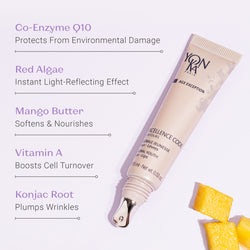
- For Comprehensive Aging: Excellence Code Contours is our premium solution for mature skin, addressing wrinkles, puffiness, and dark spots around both the eyes and the lips.
Step 4: Moisturize and Protect
Follow with your appropriate day or night cream. During the day, the most critical step for the eyes is protection. Always apply a broad-spectrum SPF and wear UV-protective sunglasses to prevent squinting and photoaging.
Key Ingredients to Look For
When reading skincare labels, certain ingredients are "gold standards" for the eye area because they address the specific biological needs of thin skin.
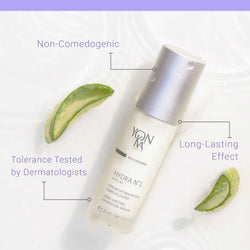
- Hyaluronic Acid: A powerful humectant that can hold up to 1,000 times its weight in water. It plumps the appearance of the skin from within, making "dehydration lines" disappear almost instantly. You can find this in Hydra N°1 Serum.
- Peptides: These are small chains of amino acids that act as messengers, telling the skin to produce more collagen. They are excellent for long-term firming.
- Vitamin C: A potent antioxidant that brightens the appearance of the skin and helps defend against free radical damage. Serum Vitamine C 20% is an excellent addition to a ritual for those looking to boost radiance.
- Beech Bud Peptides: A botanical favorite at Yon-Ka, these help to smooth the appearance of the skin's micro-relief (texture).
Lifestyle Habits for Long-Term Prevention
Skincare products work best when supported by a healthy lifestyle. Small changes in your daily routine can have a profound impact on how the skin around your eyes ages over time. If dehydration is a recurring concern, our guide on how to hydrate dehydrated skin is a useful companion read.
- Sleep on Your Back: Sleeping on your side or stomach can cause "sleep wrinkles" due to the face being pressed against the pillow for hours. If you struggle to stay on your back, a silk or satin pillowcase can reduce friction on the skin.
- Manage Blue Light: Use "Night Mode" on your devices to reduce blue light emission and try to take frequent breaks from screens to rest your eyes and stop the "tech squint."
- Hydrate from the Inside: Drinking enough water ensures that your skin cells stay plump. Pair this with a diet rich in antioxidants (think berries, leafy greens, and nuts) to fight oxidative stress.
- Wear Sunglasses: This is the most underrated anti-aging tip. High-quality sunglasses protect the skin from UV rays and physically prevent you from squinting in bright light.
The Professional Touch: Spa Treatments
While a home ritual is the foundation of eye health, professional treatments offer a deeper level of care. Our heritage is rooted in the professional spa environment, where over 7,000 specialists worldwide use our protocols to transform the skin's appearance.
A professional eye contour treatment often includes specialized massage techniques that promote lymphatic drainage and help "lift" the appearance of the brows and lids. If you find that your eye concerns are not responding to home care, we recommend using our Spa Treatments to find a Yon-Ka professional who can provide a customized clinical treatment.
Bottom line: Wrinkles around the eyes are caused by a combination of unique anatomy and environmental stress, but a ritual focused on hydration, protection, and targeted botanicals can significantly smooth and revitalize their appearance.
Conclusion
Understanding why you have wrinkles around your eyes is the first step toward a more empowered and effective skincare journey. While we cannot stop the passage of time or the joy of a smile, we can certainly provide our skin with the tools it needs to remain resilient, hydrated, and glowing. By embracing the Yon-Ka Paris ritual—cleansing gently, misting with aromatic waters, and treating the delicate eye area with pharmaceutical-grade botanicals—you are doing more than just "fixing" a concern; you are practicing a daily act of self-care.
Our brand was founded 70 years ago on the belief that nature holds the key to skin health, and we continue that legacy today through our rigorous scientific standards and phyto-aromatic expertise. If you are unsure which eye treatment is right for your specific needs, we invite you to take our Product Matcher or use our website tools to narrow down the best fit for your skin.
"Skincare is not just a routine; it is a ritual of connection between the power of plants and the needs of your skin. Treat your eyes with the gentleness they deserve, and they will reflect the light within."
Whether you choose the firming power of the Advanced Optimizer range or the refreshing rosemary in Phyto-Contour, remember that consistency is the most important ingredient. We invite you to explore our eye and lip contour range to find your perfect match.
FAQ
Can I use my regular face moisturizer around my eyes?
While some basic moisturizers are safe, the skin around the eyes is much thinner and more sensitive than the rest of the face. Regular face creams may contain higher concentrations of actives or heavy oils that can lead to irritation or milia (small white bumps). Specialized eye products like Alpha-Contour are specifically formulated to be "ophthalmologically tested" and are lighter in texture to avoid weighing down the delicate skin. If you are comparing options, our Face Moisturizers collection is a helpful place to start.
At what age should I start using an eye cream?
Prevention is always easier than correction. Because the eye area is one of the first places to show signs of environmental damage, we often recommend starting a hydrating eye treatment in your early to mid-20s. This helps maintain the skin's moisture barrier and may delay the appearance of static wrinkles caused by dehydration and sun exposure. For a more targeted routine, explore our anti-aging collection.
How do I apply eye cream correctly without causing more wrinkles?
The "how" is just as important as the "what." Always apply eye products with your ring finger, using a light "tapping" or "patting" motion. Start at the outer corner and move inward along the orbital bone (the bone you feel under your eye). Avoid applying product too close to the lash line, as it can migrate into the eye and cause irritation. If you want to compare more eye-specific formulas, our eye and lip contour range can help you narrow down the right texture and formula.
Why do my eye wrinkles look worse some days than others?
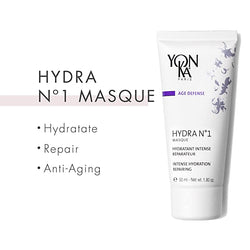
This is often due to temporary factors like dehydration, lack of sleep, or high salt intake, which can cause puffiness and "shadows" that make lines appear deeper. External factors like low humidity (especially in winter) can also dry out the surface of the skin, making fine lines more visible. Hydra N°1 Masque can be used as a "rescue" treatment on these days to quickly plump the skin's appearance.