Table of Contents
- Introduction
- The Internal Wrinkle: What Is a Macular Pucker?
- External Wrinkles: The Delicate Skin of the Eye Contour
- Bridging the Gap: Medical Care vs. Botanical Skincare
- The Phyto-Aromatic Approach to Eye Care
- Creating a Ritual for Eye Vitality
- Advanced Ingredients for the Eye Area
- Lifestyle Factors: Supporting Your Vision and Your Skin
- The Role of Professional Expertise
- Sensitive Skin and Safety Considerations
- Why Quality Formulation Matters
- Conclusion
- FAQ
Introduction
When you glance in the mirror during your morning ritual, you might be looking for those familiar fine lines at the corners of your lids—the hallmarks of a life full of laughter and expression. However, if you find yourself searching for the answer to "what is a wrinkle in your eye," you may be describing something much deeper than the delicate "crow's feet" on the surface of your skin. This phrase often refers to a medical condition known as a macular pucker, which occurs internally on the retina. At Yon-Ka Paris, we believe that understanding the health of your eyes is just as important as caring for the skin that frames them. This article will explore the internal "wrinkle" of the retina, the external lines of the skin, and how to support both through professional care and botanical wisdom. By distinguishing between these two concerns, you can better navigate your path to wellness and radiance.
The Internal Wrinkle: What Is a Macular Pucker?
The term "wrinkle in your eye" is the common way many people describe a macular pucker, medically referred to as an epiretinal membrane. To understand this, we must look past the surface and into the anatomy of the eye itself. The retina is the light-sensitive layer of tissue at the back of the eye, and at its center lies the macula. This tiny area is responsible for your sharp, central vision—the ability to see fine details, read small print, and recognize faces.
When a "wrinkle" forms here, it isn't caused by the sun or a lack of moisture, but by a thin layer of scar tissue that develops over the macula. As this scar tissue contracts, it pulls on the retina, causing it to pucker or bulge. This physical distortion interferes with how light is processed, leading to changes in how you perceive the world around you.
Quick Answer: A wrinkle in your eye, or macular pucker, is a layer of scar tissue that forms on the macula (the center of the retina). This tissue contracts and causes the retina to wrinkle, resulting in distorted or wavy central vision.
Recognizing the Symptoms
Unlike the fine lines on your skin, you cannot see an internal eye wrinkle in the mirror. Instead, you experience it through your vision. The symptoms of a macular pucker are often gradual and may include:
- Distorted Vision: Straight lines, such as door frames or lines of text, may appear wavy or crooked (a symptom known as metamorphopsia).
- Blurred Detail: You might find it increasingly difficult to read fine print or see small details, even with your usual glasses.
- Central Grayness: A gray or cloudy area may appear in the center of your vision.
- Size Discrepancy: Objects may appear smaller or larger in the affected eye compared to the other.
The Common Causes of Retinal Wrinkling
The most frequent cause of a macular pucker is aging. Most of the eye's interior is filled with the vitreous, a gel-like substance that helps the eye maintain its shape. As we age, the vitreous naturally begins to shrink and pull away from the surface of the retina.
In many cases, this separation happens smoothly. However, if the vitreous sticks to the retina, it can cause microscopic damage. As the eye attempts to heal itself, scar tissue forms on the surface of the macula, eventually leading to a pucker. Other risk factors include history of a torn or detached retina, inflammation inside the eye, or complications from previous eye surgeries.
External Wrinkles: The Delicate Skin of the Eye Contour
While an internal "wrinkle" affects your vision, the external wrinkles we see—fine lines, creases, and crow’s feet—are concerns of the skin’s architecture. The skin surrounding the eyes is significantly different from the skin on the rest of your face. It is roughly four times thinner, making it exceptionally fragile and prone to the visible signs of aging.
The eye contour lacks the density of sebaceous glands found on the cheeks or forehead. This means the area produces less natural oil, leading to a higher risk of dehydration. Furthermore, this area is in constant motion; we blink roughly 10,000 times a day, and our eyes are the center of every facial expression. This repetitive movement, combined with the gradual loss of collagen (the protein responsible for firmness) and elastin (the protein responsible for snap-back), creates the "crinkles" we often associate with aging.
If your concern is surface-level dryness or tightness around the eyes, a gentle cleansing step can make a difference; our Lait Nettoyant is designed to be soft on delicate skin.
Key Takeaway: Internal eye wrinkles are a medical condition affecting the retina and central vision, while external eye wrinkles are a cosmetic concern caused by skin thinning, dehydration, and repetitive muscle movement.
Bridging the Gap: Medical Care vs. Botanical Skincare
It is vital to understand that skincare products—no matter how advanced—cannot treat or prevent an internal macular pucker. If you notice wavy lines or distorted vision, you must consult an ophthalmologist or eye specialist immediately. They will likely perform a dilated eye exam or an Optical Coherence Tomography (OCT) scan to analyze the health of your retina.
However, the skin that protects your eyes does respond beautifully to targeted botanical care. While a surgeon might be needed to address a pucker in the macula, a consistent, phyto-aromatic ritual can help manage the appearance of fine lines, puffiness, and dark circles on the surface.
For a closer look at the eye-area treatment designed for those concerns, explore Phyto-Contour.
The Phyto-Aromatic Approach to Eye Care
At Yon-Ka, our heritage is rooted in the fusion of pharmaceutical rigor and the restorative power of nature. We utilize over 130 land and sea plants to create formulas that respect the skin's delicate balance. For the eye area, we rely on phytotherapy (the use of plant extracts) and aromatherapy (the use of essential oils) to address the specific needs of this fragile zone.
To learn more about the philosophy behind these formulas, visit Our Ingredients.
The Power of Rosemary and the Quintessence
Our signature is the Quintessence, an exclusive complex of five essential oils: lavender, geranium, rosemary, cypress, and thyme. While the Quintessence is the soul of our brand, rosemary plays a leading role in eye care. Known for its firming and "draining" properties, rosemary helps to revitalize the look of tired eyes.
When we formulate for the eyes, we focus on ingredients that support the skin's moisture barrier and promote a smooth, bright appearance. Products like Phyto-Contour utilize the power of rosemary to visibly reduce the look of puffiness and dark circles. This specific cream is a favorite in professional treatment rooms because it provides a cooling, decongesting sensation that makes the eyes feel "awake."
If you want a deeper look at the formula in context, read our Product Spotlight: Phyto Contour.
Creating a Ritual for Eye Vitality
A "hack" or a one-time application will rarely yield the results that a dedicated ritual provides. To support the health and appearance of your eye contour, we recommend a layered approach.
Step 1: Gentle Cleansing
Never pull or tug the skin around your eyes. Use a soft, milk-based cleanser like Lait Nettoyant. This formula is designed to respect the skin's natural pH and lipid barrier. Apply it with your fingertips and massage in gentle, circular motions to lift away makeup and environmental pollutants without causing stress to the thin tissue.
Step 2: The Phyto-Aromatic Mist
After cleansing, prepare the skin with Lotion Yon-Ka. This alcohol-free mist is infused with our Quintessence. It not only hydrates but also creates a "damp" surface that helps subsequent treatments absorb more effectively. For the eye area, you can even apply a mist-soaked cotton pad over closed lids for a few moments of sensorial calm.
Step 3: Targeted Treatment
This is where you address your specific concerns.
- For Puffiness and Circles: Use Phyto-Contour. Its rosemary-rich formula is designed to firm and refresh the look of the eye area.
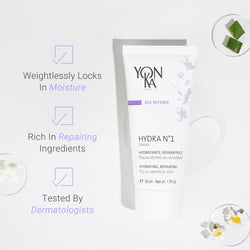
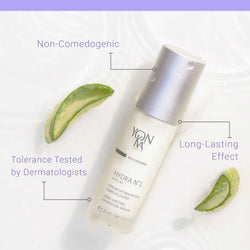
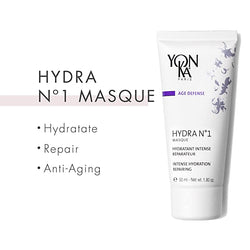
- For Fine Lines and Deep Hydration: Consider Hydra n°1 Crème. It features hyaluronic acid—a molecule that holds up to 1,000 times its weight in water—to plump the appearance of the skin from within.
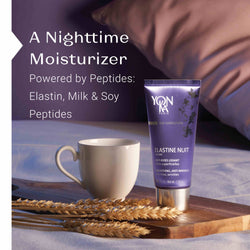
- For Early Signs of Aging: Élastine Nuit can be used in the evening to support the skin's natural repair cycle while you sleep.
If your skin is thirstier than average, you may want to begin with our Face Moisturizers collection to compare options by texture and need.
Step 4: Protection
During the day, environmental stressors like UV rays and pollution accelerate the breakdown of collagen. Vital Defense is an antioxidant-rich day cream that helps shield the skin against the external factors that contribute to premature aging.
For a product with a similar protective role, Vital Defense is a practical next step for daytime use.
Advanced Ingredients for the Eye Area
In addition to our botanical extracts, we incorporate scientifically-proven actives that complement the skin's natural functions.
- Hyaluronic Acid: A powerful humectant (moisture-binding ingredient) that provides immediate smoothing by plumping the skin's surface.
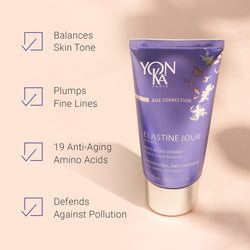
- Peptides: Short chains of amino acids that act as messengers, signaling the skin to support its own structural integrity, which can help reduce the look of wrinkles over time.
- Vitamin C: Found in our Serum C20, this stable form of Vitamin C helps brighten the appearance of the skin and provides vital antioxidant protection.
- Vitamin E: Often paired with our plant oils, it helps soothe the skin and defend against oxidative stress.
For those who want a high-performance brightening serum, see Serum C20.
Lifestyle Factors: Supporting Your Vision and Your Skin
While rituals and medical treatments are essential, your daily habits play a significant role in how your eyes feel and look.
Prioritize Sleep: During sleep, your body enters a state of repair. Lack of rest leads to increased cortisol levels, which can break down the skin's collagen. It also contributes to fluid retention, leading to the puffiness that makes fine lines more apparent.
Hydrate from Within: Your skin's hydration levels are influenced by your water intake. Drinking adequate water helps maintain the "bounce" of your skin and can reduce the appearance of dehydration lines around the eyes.
Protect from the Sun: Just as a macular pucker can be exacerbated by light-induced damage in some cases, the skin around the eyes is highly sensitive to UV rays. Wear quality sunglasses that offer 100% UV protection and always apply SPF up to the orbital bone.
Screen Breaks: In our digital age, "eye strain" is a common complaint. Staring at screens causes us to blink less, leading to dry eyes and the repetitive squinting that deepens expression lines. Follow the 20-20-20 rule: every 20 minutes, look at something 20 feet away for 20 seconds.
The Role of Professional Expertise
At Yon-Ka, our roots are in the professional spa environment. Over 7,000 skincare professionals worldwide trust our products to deliver results in the treatment room. If you are concerned about the appearance of wrinkles or the health of your eye area, a professional consultation is invaluable.
A licensed esthetician can analyze your skin type and recommend a bespoke program. They also utilize advanced techniques—such as lymphatic drainage massage—that are difficult to replicate at home. These movements help move excess fluid away from the eye area, providing an immediate look of lift and clarity. You can find a professional near you by using our Spa Locator on the website.
If you prefer a more guided routine, the Product Matcher can help narrow down the best fit for your skin concerns.
Sensitive Skin and Safety Considerations
Because the eye area is so delicate, we always advocate for a "low and slow" approach when introducing new products.
- Patch Test: Before applying a new cream to your entire eye area, test a small amount on your inner forearm or behind your ear for 24 hours.
- Introduce One at a Time: Do not overhaul your entire routine in one day. Introduce one new product and observe how your skin responds for a week before adding another.
- Sensory Cues: A slight, brief tingling can be normal with active botanical ingredients, but persistent redness, itching, or swelling is a sign to discontinue use.
- Consult a Professional: If you have a history of severe allergies or skin conditions like eczema or rosacea around the eyes, consult your dermatologist before starting a new regimen.
Why Quality Formulation Matters
Not all skincare is created equal. Our commitment to quality is reflected in our 100% French production and our adherence to strict ISO 22716 standards. We prioritize organic active ingredients and maintain a strict formulation charter that excludes parabens, SLS, phthalates, and known endocrine disruptors.
By choosing products with a high percentage of natural-origin ingredients, you are giving your skin the nutrients it recognizes and can easily utilize. This is the essence of phyto-aromatic care: working in harmony with the body's natural rhythms.
Conclusion
Understanding "what is a wrinkle in your eye" requires us to look at the eye as a whole—both the internal vision system and the external protective skin. While a macular pucker is a medical concern requiring the expertise of an ophthalmologist, the fine lines and creases of the eye contour are an invitation to slow down and embrace a supportive skincare ritual.
Yon-Ka Paris remains dedicated to this holistic vision of beauty. Our 70-year history in the world of professional skincare is built on the belief that every ritual is a moment of self-care, powered by the most potent botanicals nature has to offer. Whether you are seeking to brighten your appearance or simply protect your skin's future, we invite you to explore our collections and discover the transformative power of the Quintessence.
"Skincare is not a task; it is a ritual worth savoring—a daily commitment to the health of your skin and the peace of your mind."
If you are unsure which products are right for your unique eye concerns, we encourage you to take our Skin Diagnosis quiz or use the Product Matcher available on our site. Finding the right fit for your skin is the first step toward a more vibrant, resilient appearance.
FAQ
Is a wrinkle in the eye the same as a cataract?
No, these are different conditions. A cataract is a clouding of the eye's internal lens, whereas a "wrinkle" in the eye (macular pucker) is scar tissue on the retina. Both can cause blurred vision, so a professional eye exam is necessary to distinguish between them.
Can eye creams fix a macular pucker?
No, cosmetic eye creams only treat the skin on the surface. A macular pucker is an internal medical condition of the retina that requires diagnosis and potential treatment by an ophthalmologist, sometimes involving surgery.
What is the best ingredient for fine lines around the eyes?
Hyaluronic acid is excellent for immediate plumping and hydration, while rosemary and the Yon-Ka Quintessence help firm the look of the skin. For long-term support, look for products containing peptides or Vitamin C to maintain the appearance of skin elasticity.
How do I know if I have an internal eye wrinkle or just tired eyes?
If your vision is distorted—meaning straight lines look wavy or you have a gray spot in your central sight—it may be an internal wrinkle (macular pucker). If you only see fine lines on your skin when you smile or feel that your eyelids look "heavy," it is likely a cosmetic concern that can be addressed with rest and proper skincare.