Table of Contents
- Introduction
- The Unique Anatomy of the Eye Contour
- Primary Biological Causes of Eye Wrinkles
- Environmental and Lifestyle Factors
- The Phyto-Aromatic Approach to Eye Care
- Recommended Yon-Ka Ritual for the Eye Contour
- Application Techniques for Maximum Efficacy
- Professional Spa Treatments
- Lifestyle Changes for Long-Term Prevention
- The Role of Nutrition in Skin Elasticity
- Conclusion
- FAQ
Introduction
The way our eyes express emotion is one of the most beautiful aspects of human connection. From the crinkle of a genuine laugh to the squint of deep concentration, the skin around our eyes is constantly in motion, mirroring our inner world. However, you may have recently noticed that those delicate lines at the corners—often called "crow’s feet" or "laugh lines"—remain visible even after the smile has faded. Understanding what causes wrinkles on side of eyes is the first step toward creating a supportive skincare ritual that honors your expressions while maintaining the skin's youthful vitality.
At Yon-Ka Paris, we view these lines not as flaws to be erased, but as a call for targeted, botanical nourishment rooted in our story. This guide will explore the biological, environmental, and lifestyle factors contributing to eye-area aging and how a professional-grade phyto-aromatic approach can help restore the appearance of smoothness and firmness. By blending 70 years of French skincare heritage with modern plant science, we can address these concerns with grace and efficacy.
The Unique Anatomy of the Eye Contour
To understand why wrinkles form so readily at the side of the eyes, we must look at the unique "architecture" of this specific area. The skin surrounding your eyes is significantly different from the skin on your cheeks or forehead, making it more vulnerable to the passage of time.
Exceptional Thinness
The skin around the eyes is the thinnest on the entire body. While the skin on the rest of your face might be several millimeters thick, the eye contour is approximately 0.5mm thick—about the thickness of three sheets of paper. This extreme thinness means there is less "padding" to hide the breakdown of underlying structural proteins like collagen and elastin, and the area is more vulnerable to dry, dehydrated skin.
Minimal Sebaceous Glands
Unlike the T-zone, which is often rich in oil-producing sebaceous glands, the eye area has very few. These glands are responsible for creating the acid mantle—a protective film of oils and sweat that keeps skin lubricated and resilient. Because the side of the eyes lacks this natural moisture, the skin is perpetually prone to dehydration, which can make fine lines appear more pronounced and permanent.
Constant Muscle Activity
Beneath the skin lies the orbicularis oculi, the circular muscle responsible for closing your eyelids and squinting. We use this muscle thousands of times a day. Every time you blink, smile, or frown, this muscle contracts, folding the skin above it. Over decades, these repetitive "micro-tensions" lead to what we call dynamic wrinkles, which eventually settle into static wrinkles that stay visible at rest.
Primary Biological Causes of Eye Wrinkles
While our anatomy sets the stage, several biological processes act as the primary drivers of wrinkle formation.
The Natural Decline of Collagen and Elastin
Collagen is the protein that provides skin with its structure and firmness, while elastin is what allows the skin to "snap back" after being stretched or folded. Starting in our mid-twenties, the body’s natural production of these proteins slows down. Furthermore, the quality of the collagen produced becomes less organized. As these proteins wane, the skin at the side of the eyes loses its ability to resist the folding caused by facial expressions, leading to deeper creases.
Cellular Senescence and Oxidative Stress
In recent years, skincare science has focused heavily on cellular senescence—often referred to as "zombie cells." These are cells that have stopped dividing but refuse to die. Instead, they linger and release inflammatory signals that break down the healthy collagen and elastin around them. This process is exacerbated by oxidative stress, where unstable molecules called free radicals damage skin cells. The eye area, being so thin, has less "defense depth" against this internal biological aging.
Hormonal Shifts
For many women, the transition into perimenopause and menopause plays a significant role in skin density. The drop in estrogen levels is directly linked to a rapid decrease in skin collagen. This often results in a sudden "crepey" texture at the side of the eyes, where the skin appears thin, fragile, and more prone to sagging.
Environmental and Lifestyle Factors
While biology provides the blueprint, our environment and daily choices determine how quickly that blueprint unfolds.
UV Damage and Photo-Aging
Dermatologists often state that up to 90% of visible skin aging is caused by the sun. UVA rays, in particular, penetrate deep into the dermis, where they destroy collagen and elastin fibers. Because many people neglect to apply sunscreen right up to the orbital bone or fail to wear UV-protective sunglasses, the side of the eyes often bears the brunt of photo-damage. This leads to thickened, leathery-looking wrinkles that are much harder to address than simple dehydration lines.
Screen Time and Blue Light
In our modern era, "tech-squint" has become a genuine contributor to eye wrinkles. We spend hours daily looking at smartphones, tablets, and computers. The high-energy visible (HEV) light, or blue light, emitted by these devices can contribute to oxidative stress. Furthermore, the unconscious squinting we do while focusing on small text repetitively engages the muscles at the corners of the eyes.
Sleep Deposition and Mechanical Stress
How you sleep can actually "press" wrinkles into your face. If you are a side or stomach sleeper, your face is pressed against a pillow for seven to eight hours a night. This mechanical compression creates "sleep lines." Over time, if the skin is already losing its elasticity, these lines can reinforce the crow’s feet already forming from facial expressions.
Nutrition and Glycation
A diet high in refined sugars can lead to a process called glycation. This occurs when sugar molecules in the bloodstream attach to proteins like collagen, forming "Advanced Glycation End-products" (AGEs). These AGEs make the collagen fibers stiff and brittle, preventing them from functioning correctly. This loss of suppleness is a direct contributor to the deep folds seen at the side of the eyes.
Key Takeaway: Wrinkles at the side of the eyes are the result of a "perfect storm": a naturally thin and dry skin structure combined with high-frequency muscle movement and external damage from UV rays and lifestyle habits.
The Phyto-Aromatic Approach to Eye Care
At Yon-Ka, we believe that the most effective way to support the delicate eye contour is through a synergy of plant-based actives and professional-grade formulations drawn from our ingredients. We do not rely on a single "miracle" ingredient; rather, we create layered rituals that address the multiple causes of wrinkles simultaneously.
The Power of the Quintessence
The foundation of our brand is the Quintessence, an exclusive complex of five essential oils: lavender, geranium, rosemary, cypress, and thyme. This 100% natural complex provides more than just a beautiful scent; it acts as a catalyst for the skin’s own vitality.
- Rosemary provides a firming and revitalizing effect.
- Cypress is known for its ability to support microcirculation, which is essential for reducing the look of puffiness that can stretch the skin and lead to more wrinkles.
Targeted Botanical Actives
To address the specific structural needs of the eye area, we incorporate several key plant sciences:
- Hyaluronic Acid: A powerful humectant that can hold 1,000 times its weight in water. By drawing moisture into the upper layers of the skin, it "plumps" the appearance of fine dehydration lines instantly.
- Peptides: These small chains of amino acids act as messengers, telling the skin to produce more collagen and elastin.
- Vitamin C: Featured in our Serum C20, this potent antioxidant helps neutralize free radicals from UV exposure and brightens the look of the eye area.
- Beech Bud Peptides: Found in our more intensive creams, these help smooth the skin's surface and improve the appearance of skin density.
Recommended Yon-Ka Ritual for the Eye Contour
A consistent, twice-daily ritual is the only way to effectively manage the appearance of wrinkles on the side of the eyes. The eye area requires specialized products; your standard face moisturizer is often too heavy and may cause puffiness if applied too close to the lash line.
Step 1: Gentle Cleansing
Always start with a clean canvas. Our Lait Nettoyant is a gentle cleansing milk that removes makeup and impurities without stripping the eye area of its precious lipids. Never rub or tug the skin when removing eye makeup, as this mechanical friction causes micro-tears in the collagen.
Step 2: The Phyto-Aromatic Mist
Apply Lotion Yon-Ka PS if your skin is dry or sensitive. This mist not only prepares the skin to absorb the subsequent treatment but also provides a refreshing burst of the Quintessence essential oils to energize the skin.
If your skin is normal to oily, Lotion Yon-Ka PNG is the matching option.
Step 3: Targeted Eye Treatment
This is the most critical step for addressing wrinkles. Depending on your primary concern, choose a specialized eye cream from our eye and lip contour collection:
- Phyto-Contour: Ideal for those who experience puffiness and dark circles alongside fine lines. The rosemary in this formula provides a "lifting" sensation and invigorates the eye area.
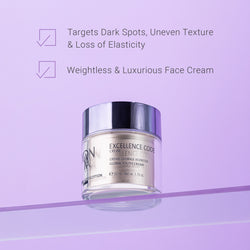
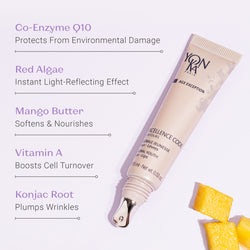
- Excellence Code Contours: Part of our Age Exception collection, this is a global youth treatment for mature skin. It uses silk tree extract and hyaluronic acid to target deep wrinkles, sagging, and loss of radiance.
- Alpha-Contour: A non-greasy gel that uses fruit acids (AHAs) to gently exfoliate and smooth the look of fine lines and "crepey" texture.
Step 4: Moisturize and Protect
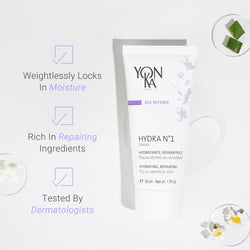
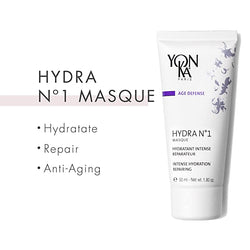
Follow with your appropriate face cream, such as Hydra N°1 Crème for intense hydration or Advanced Optimizer Crème for firming. During the day, always finish with broad-spectrum sun protection to prevent further UV-induced breakdown of the eye area.
Note: When introducing a new phyto-aromatic product, we recommend a patch test on your inner forearm for 24 hours. A slight tingling sensation can be normal due to the activity of essential oils, but if redness or irritation persists, reduce the frequency of use or discontinue.
Application Techniques for Maximum Efficacy
The way you apply your eye cream is just as important as the formula itself. Because the skin is so thin, aggressive rubbing can actually contribute to the very wrinkles you are trying to prevent.
- Use your ring finger: This is your weakest finger and will naturally apply the least amount of pressure.
- The "Dabbing" Method: Apply a small pea-sized amount of product to your ring finger. Gently dab or pat the cream along the orbital bone (the hard bone surrounding the eye). Start at the inner corner and work outward toward the temple.
- Address the "Side" Specifically: When you reach the side of the eye where the wrinkles are most prominent, use very gentle circular motions to help the product penetrate the creases.
- Avoid the Eyelid: Unless the product specifically states otherwise, do not apply eye cream directly to the upper eyelid or too close to the lower lash line, as the product can migrate into the eye and cause irritation or morning puffiness.
Professional Spa Treatments
While a home ritual is the foundation of healthy skin, professional intervention can provide deeper, more visible results. We invite you to find a Yon-Ka partner spa using our Spa Locator. Professional treatments like the Eclat Cocoon or Excellence Code facial include specialized eye contour techniques that use manual lymphatic drainage and high-concentration botanical masks to deeply hydrate and firm the skin. These professional moments offer a level of rejuvenation that is difficult to achieve with home care alone.
Lifestyle Changes for Long-Term Prevention
Skincare products work best when supported by a healthy lifestyle. To protect the investment you make in your eye ritual, consider these practical adjustments:
- Wear Sunglasses: Not just for style, but for protection. Look for lenses that provide 100% UVA and UVB protection. This prevents both UV damage and the repetitive squinting that etches lines into the skin.
- Manage Screen Habits: If you work at a computer, follow the 20-20-20 rule: every 20 minutes, look at something 20 feet away for 20 seconds. This relaxes the eye muscles and reduces "tech-squint."
- Stay Hydrated: Dehydration shows up first in the thinnest skin. Drinking adequate water ensures your skin cells remain plump from the inside out.
- Sleep on Your Back: To avoid the mechanical stress of your pillow pressing into the side of your eyes, try to train yourself to sleep on your back. A silk or satin pillowcase can also reduce friction if you must sleep on your side.
The Role of Nutrition in Skin Elasticity
What you eat provides the building blocks for the collagen your skin tries to produce.
- Antioxidants: Foods rich in Vitamin C (citrus, bell peppers), Vitamin E (almonds, sunflower seeds), and Polyphenols (green tea, berries) help neutralize the free radicals that cause eye wrinkles.
- Omega-3 Fatty Acids: Found in walnuts, flaxseeds, and fatty fish, these healthy fats support the skin's lipid barrier, helping the dry eye area retain moisture more effectively. Our Serum Omega is an excellent topical addition to support this lipid balance.
- Amino Acids: Ensure you are getting enough protein (plant-based or otherwise) to provide the amino acids (glycine, proline, hydroxyproline) necessary for collagen synthesis.
Myth: "Eye wrinkles are only a concern for people over 50." Fact: Because the eye area is so thin and active, fine lines can begin to form in your early 20s. Prevention is significantly easier than correction, making early eye care essential for everyone.
Conclusion
Understanding what causes wrinkles on side of eyes allows us to approach our skincare with intention rather than frustration. While we cannot stop the joyful expressions that make life meaningful, nor can we halt the natural passage of time, we can provide our skin with the botanical support it needs to age beautifully. Through a consistent ritual of gentle cleansing, phyto-aromatic hydration, and targeted treatment with products like Phyto-Contour or Advanced Optimizer Crème, you can maintain a smooth, radiant, and youthful eye appearance.
At Yon-Ka Paris, our mission is to provide you with a holistic skincare experience that respects your skin’s natural biology. Since 1954, we have remained dedicated to the belief that the power of plants, when harnessed with pharmaceutical rigor, can transform both the skin and the spirit. We invite you to savor your skincare ritual as a moment of daily wellbeing.
"Skincare is a ritual worth savoring, built on the power of plants and 70 years of phyto-aromatic expertise."
If you are unsure which eye treatment is right for your specific concerns, we encourage you to use the Product Matcher available on our website. Taking the time to understand your skin's unique needs is the first step toward a lifetime of radiant health.
FAQ
Why are the wrinkles on the side of my eyes suddenly more visible?
The sudden appearance of deeper lines is often due to acute dehydration or environmental changes, such as moving into a colder climate with central heating. When the skin lacks moisture, it "shrinks" slightly, making existing fine lines look much deeper. Additionally, high stress or lack of sleep can lead to puffiness, which stretches the thin skin and emphasizes wrinkles once the swelling goes down.
Can eye creams actually "remove" wrinkles?
Cosmetic eye creams are designed to improve the appearance of wrinkles rather than remove them in a medical sense. They work by deeply hydrating the skin to plump up fine lines, using peptides to support natural collagen, and utilizing antioxidants to prevent further damage. Consistent use of products like Alpha-Contour can significantly smooth the skin's texture and make lines appear much less prominent.
Is it too late to start using an eye cream if I already have deep wrinkles?
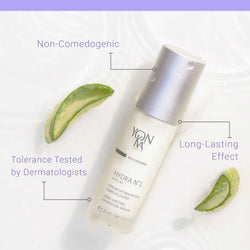
It is never too late to support your skin. Even deep, static wrinkles can be softened with the right phyto-aromatic care. Ingredients like the hyaluronic acid in our Hydra N°1 range or the redensifying botanicals in Excellence Code can improve the skin's elasticity and comfort, giving a more rested and revitalized look regardless of your age.
Should I use my eye cream in the morning or at night?
For the best results, you should use a targeted eye treatment both morning and night. A morning application provides a protective barrier against environmental stressors and can help reduce the appearance of morning puffiness. A nighttime application supports the skin's natural repair cycle, allowing active ingredients like peptides and essential oils to work undisturbed while you sleep.