Table of Contents
- Introduction
- Understanding the Architecture of Dry Skin
- The Essential Ingredients for a Dry Skin Moisturizer
- The Phyto-Aromatic Approach to Hydration
- Choosing the Best Yon-Ka Moisturizer for Your Needs
- Building Your Ideal Dry Skin Ritual
- Environmental and Lifestyle Adjustments
- The Role of Professional Expertise
- Conclusion
- FAQ
Introduction
Waking up to the sensation of tight, parched skin can feel like an immediate hurdle to your morning. When your complexion lacks that supple, bouncy feel and instead appears dull or flaky, the search for relief becomes personal. At Yon-Ka Paris, our story shows that finding the right moisturizer is more than a shopping trip; it is a quest for comfort and a return to your skin’s natural radiance. The ideal solution must do more than just sit on the surface—it needs to replenish lost lipids and lock in moisture to restore the skin's protective barrier. In this article, we will explore the science of skin hydration, the specific ingredients that effectively quench parched cells, and how to select a phyto-aromatic ritual that transforms your daily care into a moment of true wellbeing.
Quick Answer: The best moisturizer for dry skin is a rich, emollient cream that combines humectants like hyaluronic acid to draw in water with lipids like squalane or shea butter to prevent evaporation. For intensive results, look for professional-grade formulas that also include barrier-repairing ingredients such as ceramides and fatty acids.
Understanding the Architecture of Dry Skin
To determine which moisturizer is best for dry skin for face, we must first understand what "dry skin" actually means in a biological sense. Many people use the terms "dry" and "dehydrated" interchangeably, but in the world of professional skincare, they represent two distinct concerns.
Dry vs. Dehydrated: The Crucial Distinction
Dry skin is a skin type characterized by a lack of oil (lipids). Your skin produces sebum to lubricate the surface and help maintain the integrity of the skin barrier. When you have a dry skin type, your sebaceous glands are naturally underactive. This often results in a rough texture, visible flaking, and a lack of glow because there aren't enough natural oils to smooth down the skin cells.
Dehydrated skin is a skin condition characterized by a lack of water. Even someone with an oily skin type can suffer from dehydration. This happens when the skin’s water content is depleted due to environmental factors, diet, or using harsh products that strip the moisture away. Dehydrated skin often looks crepey or shows fine lines more prominently.
The most effective moisturizers for dry skin address both issues. Because dry skin lacks the oils necessary to hold onto water, it almost always becomes dehydrated. Therefore, the best products provide a "double-duty" approach: they supply the oil the skin is missing and the water it desperately needs.
The Essential Ingredients for a Dry Skin Moisturizer
Successful hydration relies on a specific trio of ingredient types: humectants, emollients, and occlusives. When you are reading a label to find which moisturizer is best for dry skin for face, you should look for a balanced blend of these three categories.
Humectants: The Water Magnets
Humectants are ingredients that attract water. They act like tiny sponges, pulling moisture from the air or from the deeper layers of the dermis up into the surface (the epidermis).
- Hyaluronic Acid: This is perhaps the most famous humectant, known for its ability to hold up to 1,000 times its weight in water. In our formulations, such as Hydra N°1 Creme, we often use different molecular weights of hyaluronic acid to ensure hydration reaches various depths of the skin surface.
- Glycerin: A classic but highly effective ingredient that helps maintain the skin’s moisture balance.
- Aloe Vera: Not only a humectant but also a soothing agent that reduces the appearance of redness often associated with dryness.
Emollients: The Skin Smoothers
Emollients are responsible for that immediate feeling of softness and silkiness. They fill in the microscopic gaps between skin cells where lipids are missing, creating a smooth, even surface.
- Squalane: A stable form of squalene (a natural component of human sebum), squalane is a superb emollient that mimics the skin’s natural oils without feeling heavy or greasy.
- Plant Oils: Ingredients like grape seed oil, hazelnut oil, and apricot kernel oil provide essential fatty acids that help "glue" the skin cells back together.
- Shea Butter: A rich, buttery emollient that provides deep nourishment and is particularly beneficial for very dry or mature skin.
Occlusives: The Protective Seal
Occlusives are the "gatekeepers" of your skincare routine. Their job is to form a thin, protective film over the skin to prevent Transepidermal Water Loss (TEWL). Without an occlusive, the water drawn in by your humectants would simply evaporate into the dry air.
- Beeswax or Vegetable Waxes: These provide a natural barrier that protects the skin from environmental aggressors.
- Ceramides: While often classified as emollients, ceramides are waxy lipid molecules that are vital for the "bricks and mortar" of the skin barrier. They help seal the skin and protect it from losing moisture.
Key Takeaway: A high-performance moisturizer for dry skin must contain humectants to hydrate, emollients to smooth, and occlusives to seal, ensuring that moisture stays exactly where it belongs.
The Phyto-Aromatic Approach to Hydration
At Yon-Ka, our formulas are rooted in the marriage of botanical efficacy and sensorial experience. We believe that treating dry skin should be a holistic process that engages the senses while delivering pharmaceutical-grade results.
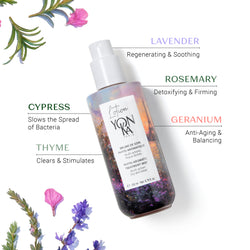
The cornerstone of our Quintessence ingredient complex is more than just a fragrance. This exclusive complex of five essential oils—lavender, geranium, rosemary, cypress, and thyme—is chosen for its specific benefits to the skin's appearance. For dry skin, the Quintessence helps to revitalize and balance the complexion, providing a stabilized environment where hydrating ingredients can work more effectively.
Note: When introducing products with essential oils, we always recommend a patch test on your inner forearm for 24 hours. Introduce one new product at a time to see how your skin responds. A slight, brief tingling sensation can be normal, but if you experience persistent redness, reduce frequency or discontinue use.
Choosing the Best Yon-Ka Moisturizer for Your Needs
Because dry skin exists on a spectrum—from occasionally tight to chronically flaky—we have developed several targeted solutions within our Intensive collection.
For Intense, Long-Lasting Hydration: Hydra n°1 Crème
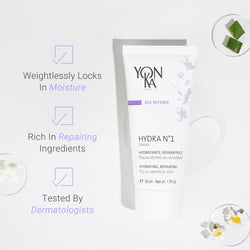
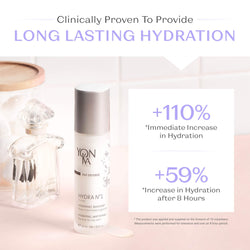
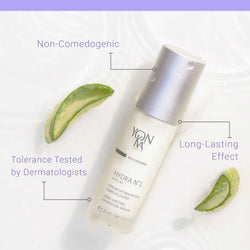
If your primary concern is persistent dryness and a feeling of discomfort, Hydra n°1 Crème is often the gold standard. From our Intensive range, this cream is specifically designed for very dry skin types. It features two forms of hyaluronic acid alongside shea butter and grape seed oil. The result is a comforting cocoon that helps repair the appearance of the skin barrier while providing immediate and long-term hydration.
For Repairing the Lipid Barrier: Serum Omega
Sometimes, a cream alone isn't enough. If your skin feels "hungry" for oil, Serum Omega is a transformative addition to your ritual. This oil-in-serum is rich in Omega 3, 6, and 9 fatty acids derived from sacha inchi oil and pomegranate. It doesn't just sit on the surface; it helps to nourish the skin deeply, restoring the suppleness that dry skin so often lacks.
For Overnight Recovery: Hydra n°1 Masque
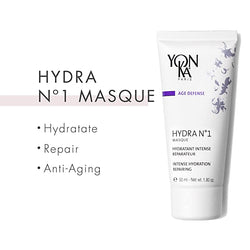
Dry skin can often look its worst in the morning if moisture is lost during sleep. Hydra N°1 Masque is a gel-cream mask that can be used as an intensive overnight treatment. By applying a thin layer before bed, you allow the active botanical ingredients to work with your skin’s natural nighttime repair cycle. You’ll wake up to a complexion that looks refreshed, plumped, and significantly less parched.
For Customization: Booster Nutri +
One of the unique aspects of our approach is the ability to customize your moisturizer. If you already have a favorite cream but find your skin is exceptionally dry due to winter weather or travel, you can add a few drops of Booster Nutri +. This oil-based concentrate is packed with vitamin-rich cereal germ oils that turn any moisturizer into a nourishing powerhouse.
Building Your Ideal Dry Skin Ritual
Finding which moisturizer is best for dry skin for face is only half the battle. How you apply your products and the steps you take beforehand determine how well that moisturizer performs.
Step 1: Gentle Cleansing Dry skin should never feel "squeaky clean," as that usually indicates the skin barrier has been stripped. Use a creamy, non-foaming cleanser like Lait Nettoyant. This cleansing milk removes impurities and makeup while respecting the skin’s natural pH and lipid balance.
Step 2: Phyto-Aromatic Preparation After cleansing, misting with Lotion Yon-Ka PS (specifically formulated for dry skin) is a non-negotiable step. This alcohol-free mist contains the Quintessence and helps to pre-hydrate the skin. Applying your moisturizer to slightly damp skin helps to lock in that extra boost of hydration and improves product absorption.
Step 3: Targeted Treatment Apply your serum or booster while the skin is still supple from the mist. This allows concentrated active ingredients to penetrate more effectively.
Step 4: The Moisturizing Seal Massage your chosen cream, such as Hydra n°1 Crème, into the face and neck using upward, sweeping motions. This manual action not only aids absorption but also stimulates circulation, which can help bring a healthy glow to dull, dry skin.
Step 5: Sun Protection During the day, always finish with a protective layer. Dry skin is particularly vulnerable to environmental damage. Even in winter, UV rays can further compromise a weak skin barrier, leading to increased dryness and premature signs of aging.
Environmental and Lifestyle Adjustments
While a high-quality moisturizer is essential, external factors can often sabotage your efforts. To truly support dry skin, consider the following environmental shifts:
- Mind the Temperature: Very hot water can dissolve the natural oils in your skin. When washing your face or showering, use lukewarm water to prevent unnecessary stripping of the lipid barrier.
- Humidify Your Space: Indoor heating and air conditioning remove moisture from the air, which in turn pulls moisture from your skin. Placing a humidifier in your bedroom can make a significant difference in how your skin feels when you wake up.
- Dietary Fats: Support your skin from the inside out. Consuming healthy fats—like those found in avocados, walnuts, and fatty fish—provides the building blocks your body needs to produce its own natural lipids.
- Gentle Exfoliation: It may seem counterintuitive to exfoliate dry skin, but a buildup of dead skin cells can prevent your moisturizer from absorbing. Use a grain-free exfoliator like Gommage Yon-Ka, which uses carob and white nettle to gently lift away dullness without irritation.
Myth: "Oils are all you need for dry skin." Fact: While oils provide necessary lipids (emollients and occlusives), they do not contain water. Dry skin needs both oils to seal and water-based hydrators (humectants) to truly replenish the skin's moisture levels.
The Role of Professional Expertise
Skincare is not one-size-fits-all. If you find that your skin remains persistently dry, itchy, or irritated despite using high-quality products, it may be time to seek professional guidance. A licensed esthetician can provide a deep-dive analysis of your skin's needs and recommend a tailored program.
Professional spa treatments can provide a level of hydration that is difficult to achieve at home. Treatments like our "Le Grand Classique" or Hydralessence treatment use specialized techniques and professional-strength formulas to deeply infuse the skin with moisture. You can use our Spa Locator to find a Yon-Ka professional near you who can help you navigate your specific skin concerns.
Bottom line: Solving dry skin requires a balanced approach that pairs moisture-attracting humectants with barrier-protecting lipids, all delivered through a consistent, gentle ritual.
Conclusion
Determining which moisturizer is best for dry skin for face depends on your unique balance of oil and water. Whether you require the intensive, comforting embrace of Hydra n°1 Crème or the lipid-rich support of Serum Omega, the key to success lies in consistency and the quality of your botanical ingredients. By embracing a ritual that respects your skin barrier and utilizes the power of phyto-aromatic science, you can move beyond temporary relief toward lasting radiance and comfort.
- Look for a blend of humectants, emollients, and occlusives.
- Always apply moisturizer to damp skin to maximize absorption.
- Support your topical products with lifestyle changes like lukewarm water and humidifiers.
Skincare is a ritual worth savoring, built on the power of plants and over 70 years of phyto-aromatic expertise. At Yon-Ka Paris, we invite you to discover the difference that professional-grade, botanical care can make for your skin.
If you are still unsure which path is right for your complexion, we invite you to take our Skin Diagnosis quiz or use the Product Matcher on our website for a personalized recommendation tailored to your specific needs.
FAQ
Is cream or lotion better for dry skin on the face?
For dry skin, a cream is generally superior to a lotion. Creams have a higher oil-to-water ratio, providing the rich emollients and occlusives needed to repair the lipid barrier and prevent moisture loss, whereas lotions are thinner and may not provide enough protection for truly dry types. You can also browse our face moisturizers for richer options.
Why is my face still dry after I moisturize?
If your skin remains dry, you might be using a product that lacks occlusives to seal in moisture, or you may have a buildup of dead skin cells preventing absorption. Additionally, ensure you aren't using harsh cleansers that strip your skin before you even apply your moisturizer.
Can I use face oil instead of moisturizer for dry skin?
While face oils are excellent for providing lipids, they do not provide hydration (water). For the best results, apply a water-based moisturizer or serum first, then "seal" it in with a face oil like Serum Omega to ensure your skin receives both water and oil.
How often should I moisturize my dry face?
You should moisturize at least twice a day—once in the morning and once before bed. However, if you live in a very dry climate or have extremely dry skin, you may benefit from a mid-day refresh using a hydrating mist followed by a light application of cream to maintain comfort.
Piel seca y deshidratada