Table of Contents
- Introduction
- Understanding the Needs of Dry Skin
- The Science of Botanical Kitchen Ingredients
- How to Make Homemade Face Mask for Dry Skin: 3 Key Recipes
- The Importance of the Masking Ritual
- Transitioning from Kitchen DIY to Professional Phyto-Aromatics
- Safety and Best Practices
- The Role of Lifestyle in Dry Skin
- Conclusion
- FAQ
Introduction
There is a unique sense of discomfort that comes with dry skin. It is that unmistakable feeling of tightness after cleansing, the appearance of rough patches in the mirror, or the way makeup seems to cling to fine lines rather than gliding over the surface. We often seek immediate relief, and the kitchen pantry frequently holds the first line of defense. Turning to natural, whole-food ingredients to soothe parched skin is a tradition that mirrors our own philosophy of botanical healing.
At Yon-Ka Paris, we have spent seven decades mastering the synergy between plant science and skin wellness. We believe that while a DIY treatment can provide a wonderful moment of self-care and temporary relief, it is most effective when viewed as a supplement to a consistent, professional-grade ritual. In this article, we will explore how to make homemade face mask for dry skin using high-quality botanical ingredients, explain the science behind why they work, and discuss how to transition those results into long-term skin health.
Quick Answer: To make a homemade face mask for dry skin, combine a moisturizing base like avocado or yogurt with a humectant like honey. For a classic recipe, mash half an avocado with one tablespoon of honey and apply for 15 minutes to replenish lost lipids and draw moisture into the skin.
Understanding the Needs of Dry Skin
Before gathering ingredients, it is helpful to understand exactly what dry skin requires. In the world of professional skincare, we make a clear distinction between "dry" and "dehydrated" skin. Dry skin is a skin type that lacks oil (lipids), whereas dehydrated skin is a temporary condition where the skin lacks water. Most people searching for how to make homemade face mask for dry skin are actually dealing with a combination of both.
Dry skin often has a compromised moisture barrier. This barrier, or the "acid mantle," is a thin film on the skin’s surface made of lipids and sweat that protects against environmental stressors and prevents trans-epidermal water loss (TEWL). When this barrier is weakened, moisture escapes, and irritants get in. A successful mask must perform two roles: it must provide humectants to pull water into the skin and emollients to seal that moisture in with healthy fats.
For a deeper dive into the difference between dry and dehydrated skin, explore our dry and dehydrated skin collection.
The Science of Botanical Kitchen Ingredients
When you look into how to make homemade face mask for dry skin, you will see the same ingredients appearing repeatedly. This is not a coincidence; these foods contain specific compounds that mimic the skin’s natural functions.
The Power of Avocado
Avocados are perhaps the most famous DIY ingredient for dry skin, and for good reason. They are incredibly rich in oleic acid and omega-3 fatty acids. These healthy fats act as natural emollients, filling the microscopic gaps between skin cells to create a smoother, more supple surface. Avocados also contain Vitamin E, a potent antioxidant that helps protect the skin’s appearance from the dulling effects of pollution.
Honey as a Natural Humectant
Honey is a skincare miracle. It is a natural humectant, meaning it has the chemical ability to attract and bind water molecules. When applied to the face, it draws moisture from the atmosphere and deeper layers of the skin into the top layer of the epidermis. Furthermore, raw or Manuka honey has mild enzymatic properties that help very gently clear away dead skin cells that can make dry skin look "flaky" or grey.
Yogurt and Lactic Acid
Plain, full-fat Greek yogurt is a surprising hero for dry complexions. It contains lactic acid, a member of the Alpha Hydroxy Acid (AHA) family. Lactic acid is unique because it is the only AHA that is also a humectant. It helps dissolve the "glue" holding dead skin cells together—allowing them to shed—while simultaneously helping the skin hold onto water. The fat content in the yogurt also provides an immediate soothing sensation to irritated or "angry" skin.
Oatmeal for Soothing
If your dryness is accompanied by itching or redness, oatmeal is the answer. It contains compounds called avenanthramides, which are known for their significant anti-inflammatory properties. When ground into a fine powder, oatmeal forms a protective film on the skin, known as a physical barrier, which helps soothe the feeling of reactivity common in dry climates.
How to Make Homemade Face Mask for Dry Skin: 3 Key Recipes
Creating these masks is a sensorial experience. We recommend using organic, fresh ingredients whenever possible to ensure you are getting the highest concentration of active nutrients without unnecessary pesticides.
1. The Lipid-Replenishing Avocado and Honey Mask
This is the ultimate choice for skin that feels physically rough or looks parched.
- Ingredients: 1/2 a ripe avocado, 1 tablespoon of raw honey, and 1 teaspoon of extra-virgin olive oil.
- Method: Mash the avocado into a completely smooth paste (any lumps will simply fall off your face). Stir in the honey and olive oil until the mixture is a uniform, creamy green.
- Application: Apply a thick layer to the face and neck. Leave it on for 15–20 minutes.
- Why it works: The avocado and olive oil provide the essential fatty acids that dry skin lacks, while the honey ensures a deep boost of hydration.
2. The Soothing Oatmeal and Yogurt Recovery Mask
Choose this recipe if your skin feels sensitive, red, or over-exposed to the elements.
- Ingredients: 2 tablespoons of finely ground oats (you can use a blender to turn regular oats into a flour-like consistency), 2 tablespoons of plain full-fat yogurt, and 1 teaspoon of aloe vera gel.
- Method: Combine the oats and yogurt and let the mixture sit for five minutes so the oats can soften. Stir in the aloe vera last.
- Application: Gently smooth over the face. Do not rub, as the oats can be slightly abrasive if your skin is very sensitive. Leave for 10–12 minutes.
- Why it works: The yogurt's lactic acid removes dry flakes, while the oats and aloe vera provide immediate cooling and relief from tightness.
3. The Brightening Banana and Turmeric Mask
This mask is ideal for "tired" dry skin that needs a boost in radiance.
- Ingredients: 1/2 a ripe banana, 1 tablespoon of honey, and a tiny pinch of turmeric (careful—too much can temporarily stain the skin yellow).
- Method: Mash the banana until liquid-smooth, then whisk in the honey and turmeric.
- Application: Apply to the face and neck. Leave for 15 minutes.
- Why it works: Bananas are rich in potassium and Vitamin A, which help with moisture balance. The turmeric helps brighten the appearance of the skin, counteracting the dullness often associated with dryness.
Key Takeaway: DIY masks are an excellent way to provide immediate, surface-level comfort using household humectants and emollients. However, for deeper, long-lasting results, these ingredients should be paired with a structured, professional skincare ritual that supports the skin's barrier 24/7.
The Importance of the Masking Ritual
In our professional spa heritage, we view the application of a mask as a sacred step in a larger ritual. Simply mashing ingredients and putting them on your face will provide some benefit, but the way you prepare the skin determines how much of that mask is actually absorbed.
Step 1: Gentle Cleansing
Never apply a mask to a face that hasn't been properly cleansed. You must remove surface oils, pollutants, and makeup so the mask can make direct contact with the skin. For dry skin, we recommend a barrier-respecting cleansing milk like Lait Nettoyant. It cleanses without stripping away the precious lipids your skin is already lacking.
Step 2: The Phyto-Aromatic Mist
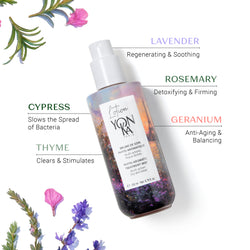
After cleansing and before your mask, use a toning mist to "prime" the skin. Lotion Yon-Ka PS is more than just a toner; it is a phyto-aromatic healing water. Spraying this onto the skin helps to dampen the epidermis, which significantly increases the absorption of the mask you are about to apply.
Step 3: Mask Application
Apply your mask (homemade or professional) in a thick, even layer. This creates an occlusive environment, meaning it traps heat and moisture against the skin, forcing the active ingredients to penetrate deeper.
Step 4: Moisture Seal
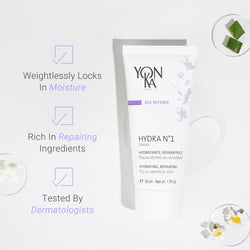
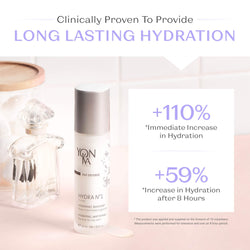
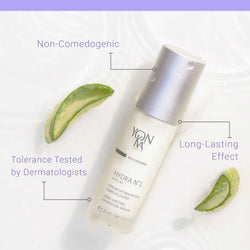
After rinsing your mask with lukewarm (never hot) water, you must immediately apply a moisturizer to "lock in" the benefits. For intense dryness, Hydra N°1 Crème is designed to provide long-lasting hydration through multiple layers of the skin.
Transitioning from Kitchen DIY to Professional Phyto-Aromatics
While learning how to make homemade face mask for dry skin is a great skill, there are limitations to what kitchen ingredients can achieve. Food-grade molecules are often quite large, meaning they sit primarily on the surface of the skin. Professional formulations, like those we create at Yon-Ka, use advanced delivery systems to ensure ingredients reach the layers where they can be most effective.
Our approach is rooted in Our Formulas. This is the fusion of plant extracts and essential oils. At the heart of nearly all our formulas is the Quintessence. This exclusive complex of five essential oils—lavender, geranium, rosemary, cypress, and thyme—helps support a balanced, sensorial ritual.
The Professional Alternative: Hydra n°1 Masque
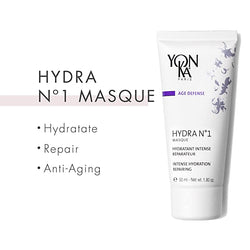
If your skin is severely dry or dehydrated and DIY remedies aren't providing lasting relief, we recommend a professional-grade treatment like Hydra N°1 Masque. Unlike a homemade mask that you must wash off, this gel-cream can be applied in a thin layer and left on overnight.
It contains both high and low molecular weight hyaluronic acid. Hyaluronic acid is a substance naturally found in our skin that can hold up to 1,000 times its weight in water. By using two different molecular weights, the mask hydrates both the surface and the deeper layers of the epidermis. This provides a "plumping" effect that helps reduce the appearance of fine lines caused by dehydration.
For more options in this category, browse our face masks collection.
Boosting with Serum Omega
For skin that is physically dry (lacking oil), we often suggest adding a booster. Serum Omega is an oil-in-serum rich in essential fatty acids from botanical oils. You can actually mix a few drops of this into your homemade avocado mask to "supercharge" it, or use it under your daily moisturizer to help support a compromised skin barrier.
If you prefer a serum-focused routine, you can also explore our serums and elixirs collection.
Safety and Best Practices
When introducing any new ingredient to your skin—whether it is from your garden, your kitchen, or a professional bottle—safety should be your first priority.
- The Patch Test: Before applying a homemade mask to your entire face, apply a small amount to your inner forearm. Wait 24 hours to ensure you don't have a sensitivity to the ingredients.
- One at a Time: Introduce only one new product or DIY recipe at a time. This allows you to accurately identify which ingredients your skin loves and which it might dislike.
- Sensitivity Note: A slight, brief tingling sensation can be normal when using active botanicals or essential oils. However, if you experience persistent redness, burning, or itching, remove the mask immediately with cool water and discontinue use. For any severe reaction, such as swelling or difficulty breathing, seek medical attention immediately.
- Consult a Professional: If you have persistent skin concerns like cystic acne, suspected rosacea, or eczema, we always recommend consulting a dermatologist or a physician before experimenting with DIY masks.
If you are not sure where to begin, use our Product Matcher to narrow down the best fit for your skin.
The Role of Lifestyle in Dry Skin
No mask, regardless of how well-formulated, can counteract a lifestyle that is actively dehydrating the skin. To make your masks more effective, consider these supporting habits:
- Humidity Matters: Heating and air conditioning strip moisture from the air. Using a humidifier in your bedroom at night can significantly reduce the "tight" feeling of your skin in the morning.
- Temperature Control: Hot water is the enemy of dry skin. It dissolves the natural oils on your skin's surface. Always wash your face and rinse your masks with lukewarm or cool water.
- Internal Hydration: While drinking water doesn't "fix" dry skin (which is an oil issue), it is essential for the health of your skin cells. Ensure you are consuming healthy fats, like those found in walnuts and salmon, to support your lipid barrier from the inside out.
Bottom line: Achieving radiant, hydrated skin is a holistic process. It begins with gentle cleansing, is supported by weekly masking rituals, and is maintained through professional-grade botanical formulas and healthy lifestyle choices.
Conclusion
Mastering how to make homemade face mask for dry skin is a beautiful way to bring the power of nature into your bathroom. By using ingredients like avocado, honey, and yogurt, you can provide your skin with the immediate nourishment it craves. However, true skin transformation is the result of a consistent ritual built on 70 years of expertise.
At Yon-Ka Paris, we remain dedicated to the belief that skincare is a ritual worth savoring—a moment of peace in a busy world. Whether you are mixing a mask in your kitchen or experiencing a professional treatment at one of our 7,000 partner spas worldwide, the goal is the same: to help your skin find its natural balance and glow. If you are unsure which professional products would best complement your DIY efforts, we invite you to visit our brand story, our ingredients page, or our spa treatments page.
Explore our Age Defense collection and our Intensive collection to find the perfect hydration partners for your unique skin journey.
"The skin is a living organ that reflects our internal health and our external environment. Treat it with the respect of a ritual, and it will reward you with radiance." — The Yon-Ka Philosophy
FAQ
How often should I use a face mask for dry skin?
For most people with dry skin, masking 2 to 3 times per week is ideal. This frequency provides a regular boost of hydration and lipids without overwhelming the skin or causing sensitivity. If your skin is severely parched, you can use a hydrating cream mask like Hydra n°1 Masque as an overnight treatment more frequently.
Can I leave a homemade face mask on overnight?
We generally do not recommend leaving DIY kitchen masks on overnight. Ingredients like yogurt or honey can become sticky, messy, or even attract bacteria if left on for too long. For overnight results, it is much safer and more effective to use a professionally formulated "sleeping mask" that is designed to be absorbed by the skin without clogging pores.
Why does my skin feel tighter after using a clay mask?
Many traditional clay masks are designed to "crack" and dry on the skin to pull out oil, which can be very stripping for dry skin types. If you have dry skin but want to clarify your pores, look for a non-drying clay mask like Masque 105. It uses a blend of three clays but is balanced with essential oils to ensure your skin stays supple and comfortable during the treatment.
Is honey safe for all skin types?
Honey is generally safe and beneficial for most skin types due to its humectant and soothing properties. However, if you have a known allergy to bees or pollen, you should avoid using honey in your skincare. Always perform a patch test on your inner arm before applying a honey-based mask to your face to ensure you don't have a specific sensitivity.
Piel seca y deshidratada